
How to Make a Storybook with AI in Minutes
Discover how to make a storybook your child will love. Our guide walks you through using AI to create personalized, print-ready stories in just minutes.
Creating your own storybook is a wonderfully personal mix of creativity, technology, and a whole lot of love. It all starts with a simple idea. From there, it only takes a few clicks to turn your child's photo into a unique character, ready to star in an adventure you’ve dreamed up just for them.
The Magic of Making Your Child the Hero
Can you picture the look on your child's face when they see themselves as the hero of a story? This guide isn't just about the how; it's about the powerful why behind making these personalised treasures. It’s a chance to build a deep, lasting connection with reading and to show a child they truly are the centre of their own amazing world.
The best part? You don't need to be a professional artist or writer to create something truly magical. With easy-to-use AI tools, the entire process is surprisingly simple and fun. You can take a single photograph and a few story ideas and spin them into a beautifully illustrated book.
From Idea to Keepsake
The whole journey, from that first spark of an idea to holding the finished, print-ready PDF in your hands, is designed to be completely straightforward. You’ll go from a simple concept to a tangible memory in just a handful of steps. This little graphic gives you a quick look at how it all comes together.
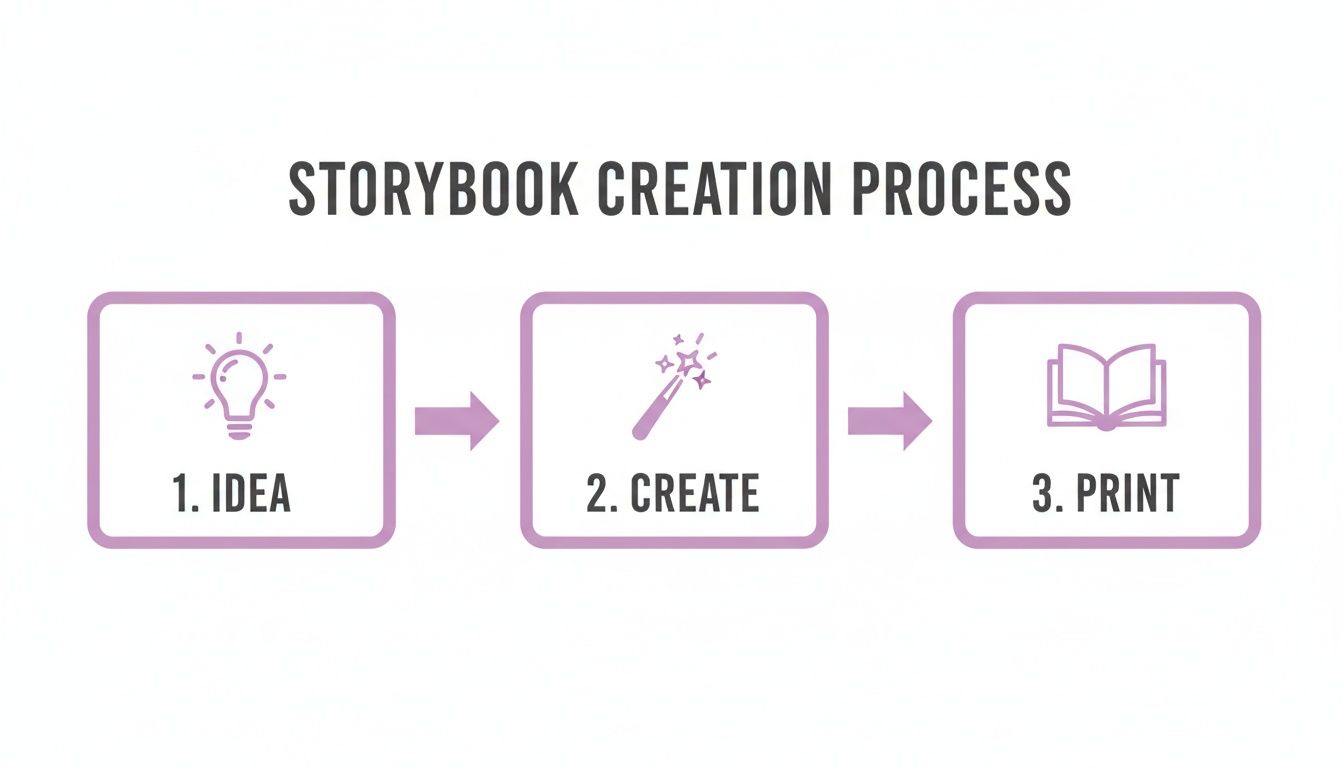
As you can see, it really boils down to your core concept, the creative magic in the middle, and the final print-ready book. Each step is designed to let your imagination take the lead.
In this guide, we're going to walk through every stage together. We'll cover all the essentials, including:
- Planning a captivating story and a courageous hero.
- Writing text that's engaging and just right for your little reader's age.
- Picking out themes and illustration styles that will make them smile.
- Formatting your pages for a polished, professional look.
- Generating your print-ready PDF using a tool like MioTales.
When you put a child right into the story, you're doing so much more than just entertaining them—you're empowering them. Seeing themselves tackle challenges on the page builds real-world confidence and helps create a love for reading that can stick with them for life. You can dive deeper into how to create personalized children's books and discover their full potential in our detailed article.
Bringing Your Little Hero and Their World to Life
Every truly great story needs a hero we can root for and a world that pulls us in. This is where the real magic happens, where you get to craft a tale that’s deeply personal and utterly enchanting for your child. And the star of this show? Your little one, of course.
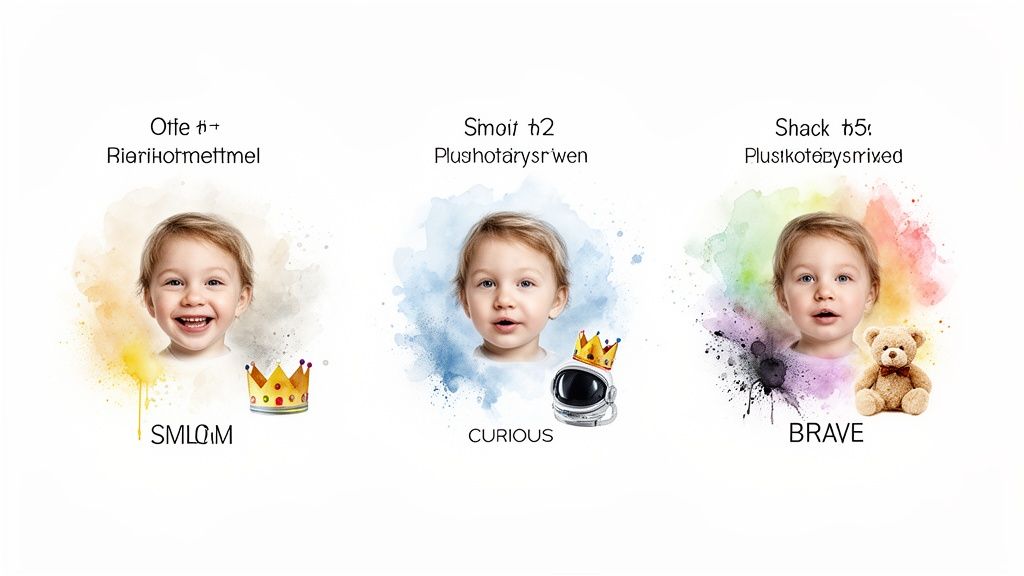
Thankfully, you don't need to be a professional artist to do this. Modern tools, like MioTales, let you kick things off with just a single photo. The tech does the heavy lifting, generating a custom illustration that puts your child right at the centre of the action from the very first page.
Crafting a Character With Heart
Looks are one thing, but a memorable hero needs a real personality. What makes your child them? Are they a bundle of endless curiosity? Fiercely brave? Or maybe the kindest soul you know? Weaving these genuine traits into the narrative makes the character feel real and helps your child see themselves in the story.
This is your chance to sprinkle in those small, personal details that will make them light up with recognition:
- Does their favourite stuffed monkey become a trusty sidekick on a jungle trek?
- Do they have a special catchphrase you can work into the dialogue?
- Maybe their well-known love for mangoes or samosas makes a surprise appearance during a grand feast.
These little touches are what elevate a simple character into a hero they'll truly champion. It's this connection that can spark a lifelong passion for reading.
We're seeing this trend explode, especially in places like India, where the digital boom has created a huge appetite for e-books and custom stories. Personalised children's books are soaring in popularity as parents increasingly want to see their own kids as the protagonists. In fact, publishers have noted that 60% of Indian families are now actively seeking interactive, culturally rich stories that reflect local traditions or modern-day adventures—a perfect fit for what a custom book can offer. You can dig deeper into this market and the impact on children's books in India to see just how big this is getting.
Choosing an Adventure That Clicks
With your hero ready for action, it’s time to build their world. The theme you choose sets the entire tone of the story. Will your child star in a knight's daring quest to befriend a misunderstood dragon? Or perhaps they'll blast off as an astronaut navigating shimmering galaxies? It could even be a quiet, soothing bedtime story about finding a lost teddy bear.
The best adventures are always the ones that tap into a child's current passions. Think about what they're truly excited about right now. Dinosaurs? Fairies? The deep blue sea? Leaning into their interests is the surest way to grab their attention from the get-go.
My Favourite Tip: Don't feel boxed in by standard tropes! Some of the most memorable stories come from twisting expectations. A pirate who's terrified of water or a princess who would rather build robots can make for a wonderfully quirky and unforgettable tale. The whole point is to create a world that sparks pure joy.
Of course, the right theme also needs to be age-appropriate. A toddler will adore a simple, repetitive story about farm animals, while an older child might be ready for a complex mystery with clues to unravel.
Matching Story Themes to Your Child's Age
To help you get it just right, here's a quick reference guide for picking themes and story lengths that are likely to be a hit with different age groups.
| Age Group | Recommended Themes | Ideal Story Length (Pages) | Content Focus | | :--- | :--- | :--- | :--- | | 2–4 Years | Animals, Daily Routines, Colours, Bedtime | 6–10 Pages | Simple sentences, repetition, sensory details | | 5–7 Years | Friendship, Fantasy, First Adventures | 10–15 Pages | Basic plot, clear problem and solution, emotional growth | | 8–10 Years | Mystery, Science, Historical Quests | 15–20 Pages | More complex plots, character development, moral lessons |
Use this as a starting point, but always remember that you know your child best. The perfect adventure is the one that speaks directly to their unique and wonderful imagination.
Weaving the Story and Picking an Art Style
Now for the fun part. With your hero and theme mapped out, it's time to actually create the story—the words, the pictures, the magic. This is where your ideas start to look and feel like a real book. Thankfully, you don't have to be a professional writer or illustrator. Modern tools can act as your creative partner, turning your vision into a beautiful, tangible story.
First up, the narrative. A good story-making platform will handle the heavy lifting, automatically adjusting the text complexity based on the age you’ve selected. So, a tale for a toddler about finding their favourite teddy bear will naturally use simple, repetitive sentences. In contrast, an adventure for an older child embarking on a magical quest will feature a more intricate plot and richer vocabulary.
But you’re still the director. You get to guide the story by adding those personal details that make it truly unique.
- Choose the setting: Is the adventure unfolding in your own back garden, or are we blasting off to a planet made of jelly?
- Bring in family members: Maybe Grandma joins the quest as a wise wizard, or a younger sibling tags along as a cheeky sidekick.
- Decide on the emotional tone: Are you going for laugh-out-loud silly, calm and reassuring, or page-turning suspense?
The more of these specific, personal touches you add, the more your child will see themselves and their world in the story.
Finding the Perfect Visual Flavour
The illustrations are what give a storybook its soul. They set the mood, create the atmosphere, and ultimately draw the child into the world you've built. The art style should feel like a natural extension of the story itself. Think about the feeling you want your child to have when they first open the book.
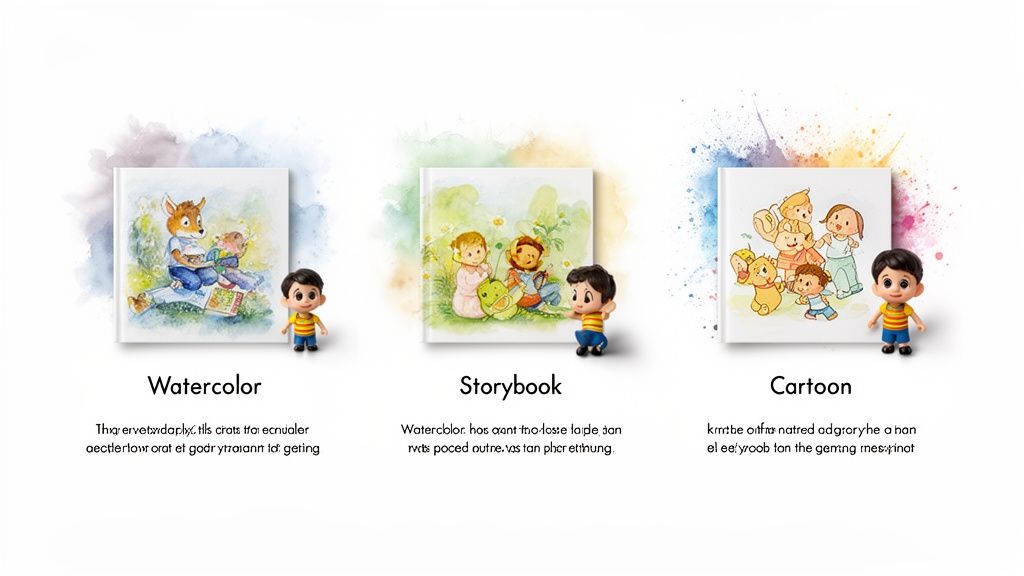
Here are a few popular styles I’ve seen work wonderfully:
- Watercolour: Soft, dreamy, and almost ethereal. This style is perfect for whimsical fairy tales, stories centred around nature, or gentle bedtime reads. The blended colours give it a classic, calming feel that’s just lovely.
- Storybook: This is that timeless, classic look we all remember from our own childhoods. It’s comforting and familiar. With its clean lines and warm colour palette, it's incredibly versatile and suits nearly any theme, from brave knights to friendly monsters.
- Cartoon: Bold, vibrant, and bursting with energy! This style is a fantastic choice for action-packed adventures, funny stories, or superhero sagas. The bright colours and expressive characters are guaranteed to bring a smile to your child's face.
Your choice of art style is so much more than just decoration; it's a powerful storytelling tool. A soft, painterly style can make a fantasy world feel truly magical, while a bold, graphic look can amplify the thrill of a grand adventure. It’s worth taking a moment to explore different options. You can see many beautiful examples of these art styles in action to find the perfect match for your tale.
The appetite for these kinds of visually engaging, personalised stories is on the rise. In India, for instance, the children's picture book market is growing rapidly, with a huge portion of sales now focused on books for kids aged 3-8. Personalised books are carving out a significant niche because parents, like you, want to give their children stories set in worlds they recognise and love.
By thoughtfully pairing your narrative with the right visual style, you're doing more than just making a book—you're crafting an entire world for your child to step into, again and again.
Getting Your Storybook Ready for the World
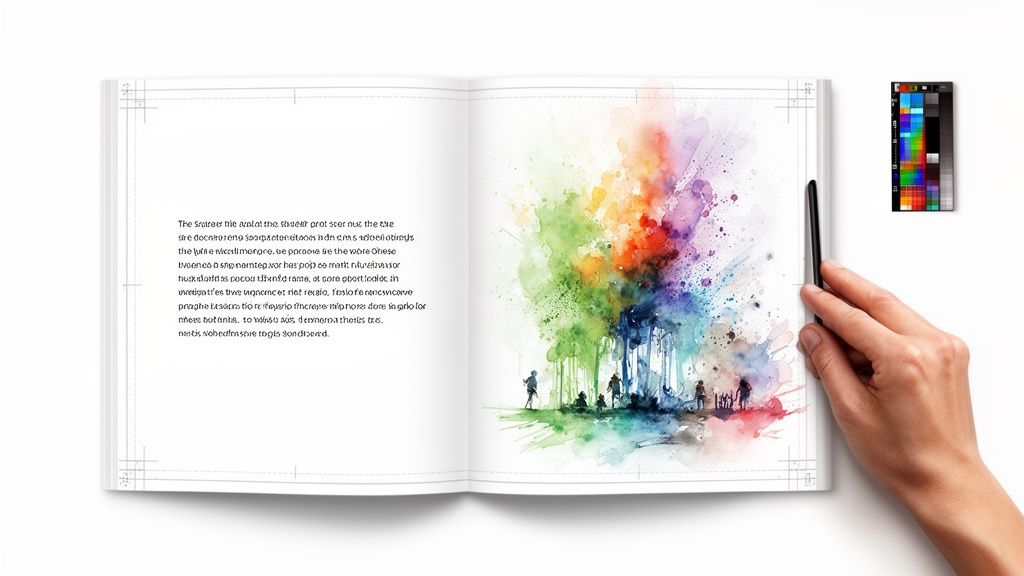
You’ve written the story and picked out the perfect art. Now for the exciting part—seeing it all come together as a real book. This is where we’ll do a final polish and get your storybook ready for its big debut, whether it's destined for a bookshelf or a tablet screen.
Start with one last read-through. Try to see it through your child's eyes. Does the text on each page match the feeling of the illustration? This is a quick gut check to make sure the rhythm feels right and the words and pictures are telling the same story.
Finding the Sweet Spot for Story Length
As you flip through the pages, you might feel the story is a bit rushed, or maybe it drags on a little too long for one sitting. No worries at all. This is a common feeling, and thankfully, it’s a simple fix. Most AI storybook generators let you adjust the length of the narrative on the fly.
Here’s a little cheat sheet I use when thinking about page count:
- For Toddlers (Ages 2-4): Keep it short and sweet. A book around 6 to 10 pages is just right to hold their attention for a quick bedtime story.
- For Young Readers (Ages 5-7): You can stretch this to 10 to 15 pages. This gives you enough room to build a little more on the plot and create a more satisfying adventure.
- For Older Kids (Ages 8+): Go ahead and create something a bit more substantial, like 15 to 20 pages. This length is great for more complex characters and a few fun plot twists.
Tweaking the length is a small step, but it makes a massive difference. It means the book isn't just personalised with their name, but it’s also perfectly paced for their age and attention span.
Exporting a Perfect, Print-Ready PDF
Once you’re completely happy with the flow, length, and layout, it's time to export the final file. What you're aiming for is a high-quality, print-ready PDF. This is the gold standard for both professional printing and digital sharing because it locks in all your colours, fonts, and formatting exactly as you see them on screen.
The magic of a high-resolution PDF is how flexible it is. You can take that file to a local print shop for a professional-looking bound copy, print it at home for a heartfelt DIY project, or email it to family members around the world.
The actual process couldn't be easier. On platforms like MioTales, it’s usually just a click of a button to generate and download your PDF. In a few moments, you'll have a beautiful digital keepsake ready to go. And just like that, you’ve taken a simple idea and turned it into a finished, shareable treasure.
Creative Ways to Use Your Personalised Storybook
So, you’ve got this beautiful, print-ready PDF in your hands. But what you're really holding is so much more than just a book. You've created a powerful tool for connection, learning, and celebration. The ways you can use it are truly endless, turning a simple story into a cherished experience.
For anyone looking for the perfect gift, a personalised book can easily become the star of the show. It’s a thoughtful, one-of-a-kind present that speaks volumes about how much you care. And it's not just a niche idea anymore; people are increasingly looking for meaningful, custom gifts for big moments.
Just look at India, where the children's picture book market is booming. With such a huge population of young readers, a growing number of parents are specifically seeking out personalised books for birthdays and festivals. You can read more about these fascinating edutainment trends in the Indian market for more context.
Taking Gifting to the Next Level
Why just hand over the book when you can create a whole experience around it? Making the gift truly memorable is all about the presentation.
- Build a Themed Gift Set: Is your story about a brave little knight? Pair the book with a fun toy sword and shield. If it's a cosmic adventure among the stars, why not add a small telescope or some glow-in-the-dark star stickers for their bedroom ceiling?
- Host a Grand Unveiling: Organise a special "premiere" reading. Gather the family, make some popcorn, and unveil the story like it's a blockbuster movie premiere. This turns the simple act of reading into a full-blown event.
- Add Some Themed Treats: Get creative in the kitchen! Bake a batch of cookies or a cake decorated to look like the characters or scenes from the book. It’s a delicious way to bring the story to life.
These little touches transform a lovely present into an unforgettable memory, showing the child just how much their unique personality inspired a world of fun.
A Powerful Tool for Parents and Educators
Beyond birthdays and holidays, your custom storybook can be an incredibly practical and impactful tool for learning and emotional development. It’s a brilliant way to make abstract or intimidating concepts feel personal and engaging.
As a parent, you could create a story to help your child navigate a new experience. Think about their first day at school, a trip to the dentist, or welcoming a new sibling. By casting them as the brave hero of the story, you can help demystify scary situations and build their confidence before they even happen.
For educators, the possibilities are just as exciting:
- Unique Reading Rewards: Imagine a student reaching a reading milestone and receiving a short story where they are the star. It's a powerful and personal motivator.
- Customised Learning Materials: You can teach almost any topic this way. Need to explain the life cycle of a butterfly or a key historical event? Place your students right in the middle of the narrative to make it stick.
- Supporting Neurodiverse Children: For a child who might find reading overwhelming, a calm, predictable story focused on their special interest can make all the difference. It creates a comfortable and joyful activity where they feel seen and understood.
A storybook tailored to a child's unique interests and needs can be a game-changer. It validates their world, builds their self-esteem, and turns reading from a task into a true pleasure.
Your Privacy Is Paramount
As you create these deeply personal stories, you can rest easy knowing your family’s privacy is completely protected. When you upload a photo to generate a character, it’s used solely for the creation of that one book. The moment the story is finished, the photo is automatically and permanently deleted. Your data stays secure, always.
A Few Common Questions About Making AI Storybooks
Diving into AI story creation is exciting, but it's totally normal to have a few questions before you start. Knowing how the process works, especially around privacy and creative control, can help you feel confident in making something truly special. Let's tackle some of the most common queries I hear.
Do I Need Any Special Design or Writing Skills?
Honestly, no. That's the real beauty of tools like MioTales. They're designed for parents, grandparents, and teachers, not artists or professional writers.
You just need to bring the heart of the story: your child’s photo, their name, and a theme you know they’ll adore. The AI then does the heavy lifting, spinning up a narrative, crafting beautiful illustrations to match, and laying it all out for you. It's an intuitive process that turns anyone into a storybook author in minutes.
What Happens to My Child's Photo and Personal Data?
This is a big one, and rightly so. Your privacy is paramount. When you upload a photo to create the main character, that image is used only for generating the book.
As soon as your storybook is finished, the photo is automatically and permanently deleted. This isn't just a policy; it's a built-in security measure to ensure your family's data stays protected. It gives you complete peace of mind, knowing your information is never stored or used for anything else.
The ability to customise these books from the ground up makes them a fantastic tool for inclusivity. When you control every part of the story, you can build a world that feels safe, familiar, and genuinely engaging for any child.
Can I Make a Book for a Neurodiverse Child?
Absolutely, and this is where these tools can be incredibly powerful. Because you have total control over the theme, characters, tone, and setting, you can craft a story that aligns perfectly with a child’s unique interests and sensitivities.
You could create a calm, predictable narrative to offer comfort, or build a story entirely around a special interest to make reading an exciting and joyful experience. This level of fine-tuning helps make stories far more accessible and fun for everyone.
What Can I Do with the Final PDF File?
The high-quality PDF you get at the end is surprisingly versatile.
- You can print it at home for a quick DIY project.
- Take it to a local print shop for a more professional-looking bound book.
- Share it digitally on a tablet or computer for story time on the go.
It's also perfect for emailing to family members who live far away, so everyone can share in the magic. Many platforms offer unlimited PDF exports, meaning you can create and share as many unique adventures as you can dream up.
Ready to turn your idea into a beautiful, personalised storybook? With MioTales, you can create a magical adventure starring your child in just minutes. Start creating your free storybook today!
Built with Outrank app
Related Free Tools
If this post helped, these tools will help you keep going right away.


