
How to Create a Storybook for Kindergarten from Start to Finish
Learn how to create a magical storybook for kindergarten. Our guide covers story ideas, illustrations, and using AI to personalize your child's tale.
Creating a storybook for kindergarten is one of the most rewarding projects you can undertake. It's a chance to connect with a young learner in a truly magical way. This isn't just about putting words and pictures on a page; it's about creating a powerful tool that boosts early literacy, sparks imagination, and builds a real emotional connection by making the child the hero of their own adventure.
Why a Personalised Storybook is a Game-Changer for Little Learners
Just picture the look on a child's face when they realise the hero of the story is them. A personalised storybook isn't just another book on the shelf; it's an open invitation into a world where they get to be the star. This simple touch of customisation can have a massive impact on their development, turning regular story time into an experience they'll never forget.
When a child's own name, appearance, or even their beloved pet is woven into the narrative, the story instantly becomes more relevant and exciting. This personal connection is key. It naturally fosters a much deeper interest in reading because research shows that kids are far more motivated to read and pay closer attention when the story feels like it's about their world.
Building Confidence and a Love for Reading
A custom storybook for kindergarten gives a direct boost to foundational literacy. Seeing their own name in print is a huge step toward name recognition—one of the first milestones in learning to read. As you read together, they start connecting the letters on the page with the sounds they already know, reinforcing phonemic awareness in a fun, completely natural way.
Better yet, these stories can be shaped to tackle specific learning goals or personal milestones. A book about a character who looks just like them learning to share, trying a new vegetable, or being brave in the dark gives you a safe and relatable way to talk about big feelings and new challenges. It’s a wonderful way to build their emotional intelligence right alongside their confidence.
A personalised book sends a powerful message: "You are important. Your story matters." That feeling of validation is an incredible foundation for self-esteem and a lifelong love of reading.
Creating a Lasting Bond
The time spent creating and reading a personalised book is a shared experience that strengthens the bond between a child and a parent, grandparent, or teacher. It becomes a special ritual—a quiet moment of connection that's all about them. These shared stories become cherished memories, teaching kids to associate reading with warmth, safety, and love. If you're curious, you can explore a deeper dive into the benefits of personalised books for kids and see just how big of an impact this simple act can have.
The good news is that modern tools have made creating these incredible keepsakes easier than ever. Platforms like MioTales give you everything you need. You can:
- Generate a character that looks just like your child.
- Weave their name and other details right into the plot.
- Choose themes that perfectly match their interests, whether it's dinosaurs or space adventures.
- Select professional art styles to bring the entire story to life.
This guide will walk you through every step, from that first spark of an idea to holding a beautiful, meaningful storybook in your hands.
Getting Inside the Head of a Kindergartener
Before you even think about characters or plot, the first thing you have to do is put on your "kindergarten goggles." Try to remember what it was like to be four, five, or six years old. It’s a magical, confusing, and exciting time where emotions are huge, and the world is full of wonder. Tapping into that specific developmental stage is what separates a good story from a truly unforgettable one.
Think about it: this is an age where big ideas are just starting to click. Concepts we take for granted—like sharing, waiting for your turn, or understanding why a friend might be sad—are massive learning moments. They're also figuring out cause and effect, that "if I do this, then that happens." It’s a huge mental leap!
And let's be honest, their attention spans are fleeting. You have to hook them fast. A story needs a character they can instantly relate to or a situation that sparks their curiosity right from the first page. Forget long-winded descriptions or complex side stories; you'll see their eyes glaze over in seconds.
What's the Point of Your Story?
Every fantastic children's book has a "why" behind it. Maybe it’s just to get a giggle, and that’s a perfectly good reason! But knowing your goal ahead of time helps you stay on track and create a story with real impact.
So, what are you hoping to accomplish with your book?
- Teaching a specific skill? This is the classic approach. Think about a little caterpillar munching his way through 1 apple, 2 pears, and 3 plums. It's a fun way to practice counting. Or a story about a rabbit searching for his yellow raincoat can subtly reinforce colours.
- Exploring a big feeling? A lot of the best stories help kids work through common worries. A tale about a little ghost who’s afraid of the dark can be incredibly comforting. It gives them the language and a safe space to talk about their own fears.
- Showing positive behaviour in action? Stories are powerful tools for modeling social skills. Instead of just telling a child to "cooperate," a story about two squirrels who have to work together to get an acorn shows them how it's done.
The need for great books that do this well is bigger than ever. The global market for kindergarten books is expected to grow from $798.65 million in 2024 to an incredible $1.19 billion by 2034. That boom shows just how much parents and teachers are looking for quality stories that support early learning. If you're curious about the numbers, you can explore the full research on kindergarten books.
Tying Your Tale to Their World
To really make your story stick, you need to align it with the real-life milestones of a four- to six-year-old. Their lives are filled with new experiences and challenges, which happen to be the perfect ingredients for a compelling plot.
To help you get started, here's a quick look at where they are developmentally and how your story can connect with their experiences.
Developmental Milestones for Kindergarten Readers
| Developmental Area | Key Characteristics (Ages 4-6) | Storybook Application | | :--- | :--- | :--- | | Cognitive | Developing logical thinking; grasps cause and effect; short attention span; learning letters, numbers, and colours. | Use simple, clear plots. Incorporate repetitive phrases. Weave in foundational concepts like counting or identifying shapes. | | Social | Moving from playing alongside others to playing with them; friendships are very important; learning to share and cooperate. | Create stories about making friends, working as a team, or resolving simple conflicts. Model turn-taking and empathy. | | Emotional | Experiencing big emotions (joy, anger, sadness, fear) but struggling to name or manage them; developing empathy for others. | Feature characters who express clear emotions. Show healthy ways to cope with feelings like frustration or shyness. | | Language | Vocabulary is exploding; loves rhymes, silly words, and predictable patterns; can follow a multi-step story. | Use rich but accessible vocabulary. Include rhyme, rhythm, and alliteration. Keep sentences relatively short and direct. |
By keeping these developmental realities in mind, you can craft a narrative that feels genuinely true to a child's experience.
A truly successful storybook for kindergarten meets children where they are. It reflects their world, validates their feelings, and gently guides them toward new understanding without ever feeling like a lesson.
Think about the playground drama you’ve seen. A story about a character feeling left out can be a powerful conversation starter about kindness and inclusion. When the character in the book finds a positive way to solve their problem, you’re giving the child a practical tool they can use in their own life.
Ultimately, when you connect with them on their level, your story becomes more than just words on a page. It becomes a trusted friend and a helpful guide through the often confusing, always exciting, world of being a kindergartener.
Crafting Your Story and Building an Engaging Plot
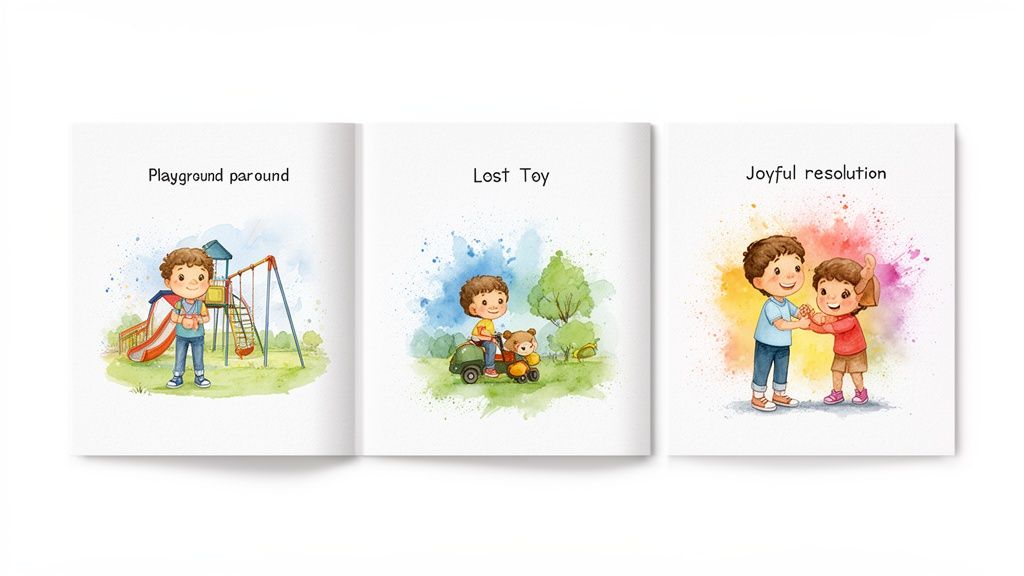
Alright, you know who you’re writing for and what you want them to take away from the story. Now for the really fun part: breathing life into your idea.
Every memorable children's story, no matter how simple, is built on a solid foundation. This framework is what pulls a child through the pages, making them wonder what happens next without ever feeling lost or confused. For a storybook for kindergarten, you don’t need complex plot twists or a huge cast of characters. What you need is a clear, comforting journey with a beginning, a middle, and a happy, satisfying end.
The Three-Act Structure for Little Listeners
This classic structure is your best friend when writing for young children. Think of your story in three distinct parts. It’s a tried-and-true method that helps you organise your thoughts and ensures the narrative flows just right.
-
The Beginning (The Setup): This is where we meet your main character in their ordinary world. Let's introduce them doing something completely relatable. Maybe it’s a little bear named Barnaby who adores collecting shiny pebbles, or a girl named Anika who is getting her backpack ready for her very first day at a new school. The goal here is to create an instant connection.
-
The Middle (The Adventure or Challenge): Suddenly, something changes. Barnaby the bear misplaces his absolute favourite sparkly blue pebble. Anika walks into the noisy classroom and feels too shy to talk to anyone. This is the heart of your story—a simple problem or a small, achievable quest that needs solving.
-
The End (The Resolution): And here’s where our hero figures it out. Barnaby finds his pebble with a little help from a friendly squirrel, learning something about teamwork. Anika takes a deep breath, says "hello" to another child on the swings, and they discover a shared love for drawing. The ending should always bring a sense of comfort, closure, and perhaps a gentle lesson learned.
This simple structure provides an emotional safety net. Young kids can enjoy the mild suspense of the challenge because they have an innate trust that everything will turn out okay in the end. For a deeper dive into building out your narrative, our guide on how to write your own story has some fantastic tips.
Finding That Story Spark
So, where do great story ideas come from? Honestly, they're everywhere—especially when you start seeing the world through a five-year-old’s eyes. The biggest adventures often spring from the smallest, most familiar moments.
If you're feeling a bit stuck, try one of these prompts inspired by a kindergartener's world:
- The Lost Toy: A beloved stuffed animal has vanished! The search becomes a mini-adventure through the house, garden, or playground.
- The First Time: This could be anything from riding a bike without stabilisers to a first sleepover at a grandparent's house.
- A Magical "What If?": What if your pet could talk for just one day? What secrets would they share?
- Fixing a Mistake: A character accidentally breaks their parent's favourite mug. How do they make it right, and what do they learn about honesty?
The most powerful stories for this age group are often not grand fantasies but reflections of a child's own reality, with just a little touch of magic or wonder sprinkled in.
The appetite for these kinds of stories is massive and growing. Take India's publishing market, for instance—the sixth-largest in the world. With nearly half of its 1.277 billion population under the age of 25 and literacy rates on the rise, the demand for engaging children's books is booming.
By grounding your story in familiar experiences, you make it instantly relatable. A child listening to a tale about a lost teddy doesn't need the concept of "loss" explained; they already get it. That emotional connection is what will have them begging you to read it again and again.
Weaving Words and Pictures Together
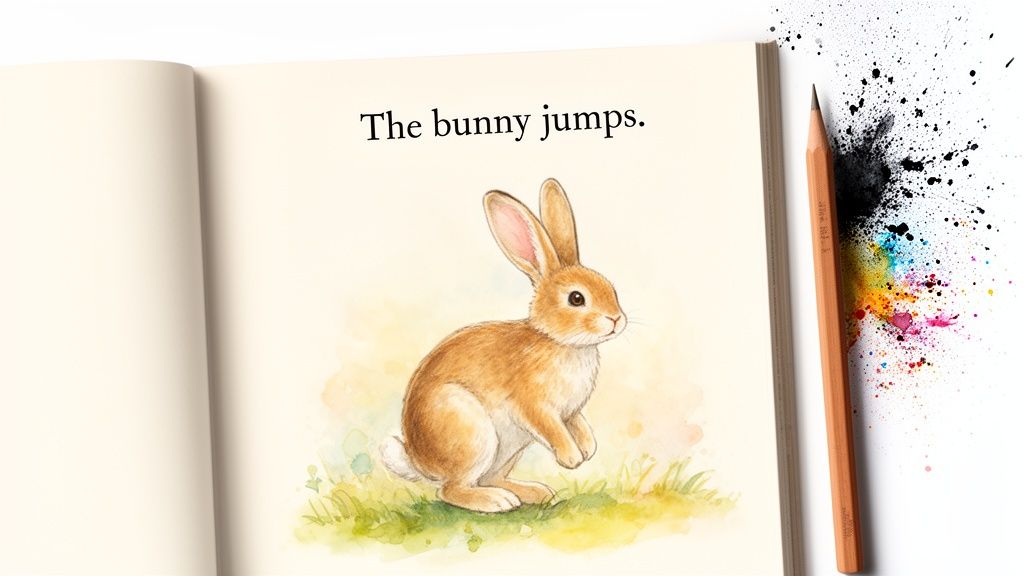
When you're creating a storybook for a kindergartener, think of the words and the pictures as equal partners in a dance. The illustrations bring your characters to life, making them feel real and relatable, while the language gives them a voice. Nailing this balance is what turns a simple story into a truly magical experience.
The language you choose should feel like a warm, comforting blanket. Stick to short sentences and words they already know. This isn't the place to show off a big vocabulary; it's about building their confidence and making reading feel like a joy, not a chore.
Writing for Little Ears
For a five-year-old, the sound and rhythm of the words are just as captivating as their meaning. This is why kids adore repetition and rhyme—it makes the story feel predictable in a comforting way, almost like a game they can play along with.
Try weaving in a recurring phrase. Something like, "But the little bunny kept hopping, hopping, hopping," every time your character gets moving. This little trick helps build memory and anticipation. Before you know it, they’ll be chiming in with the "hopping, hopping, hopping" part right on cue!
Here are a few pointers I've picked up for crafting text that connects:
- Keep sentences short and to the point. Try to stick to one main idea per sentence. Instead of, "The fluffy, grey squirrel with the bushy tail scampered quickly up the tall oak tree to find his acorn," break it down: "Squirrel was grey and fluffy. He ran up the big oak tree. He wanted to find his acorn." See how much easier that is to follow?
- Maintain a positive and reassuring tone. Even when your hero faces a tricky situation, the overall feeling should be one of safety and hope. A storybook should be a safe haven for a child exploring the big, wide world.
- Sprinkle in new words carefully. While you want to use familiar language, it's also a great opportunity to gently introduce a new "big" word or two. If a character feels "exasperated," make sure the illustrations and the situation make its meaning obvious. This is how vocabulary grows naturally.
The best kindergarten stories feel like a warm hug in book form. The language is a gentle guide, leading the child through the narrative without ever causing confusion or frustration, making them feel smart and capable.
When the language is this clear, a child’s imagination is free to take flight. They can focus on the plot and what the characters are feeling, which is where the real magic happens.
Finding the Perfect Art Style
Just as your words set the tone, the illustrations create the entire mood of your book. The art style you land on can make a story feel whimsical, adventurous, cosy, or just plain silly. There’s no single "right" style—it all comes down to the specific story you want to tell.
Think about the feeling you're aiming for. Is it a quiet, gentle bedtime tale? Soft watercolours with dreamy, blended colours might be perfect. Or is it a zany adventure about a superhero pig? In that case, bold, bright, cartoon-style graphics will capture that high-energy fun.
Using a platform like MioTales makes this part surprisingly easy. You don't need to be an artist to create a beautiful storybook for kindergarten. You can browse a whole library of professional art styles to find the one that fits your story like a glove.
- Watercolour: Fantastic for gentle, emotional, or nature-themed stories.
- Cartoon: The go-to for funny, action-packed, and silly adventures.
- Classic Storybook: Gives a timeless, nostalgic feel to your tale.
- 3D Style: Offers a modern, almost cinematic look that really pops off the page.
Making Pictures Tell the Story
Your illustrations should do more than just decorate the page. They need to actively support the text and, in many cases, add extra layers of meaning. For kids who aren't yet reading, the pictures are their main guide through the plot. They have to be clear, expressive, and packed with details they can point to and discover.
A great illustration can show an emotion that words can't quite capture—like the slight droop of a character's ears to show sadness, or wide, sparkling eyes to show pure wonder. These visual cues are brilliant for building emotional literacy.
This is also your chance to get interactive. Why not hide a little snail on every page for your child to find? Or add funny little details in the background that aren't even mentioned in the text? This turns reading into an exciting treasure hunt and encourages kids to look closely, a critical pre-reading skill. Your goal is to make every single page a new world to explore.
Bringing Your Story to Life with a Personal Touch
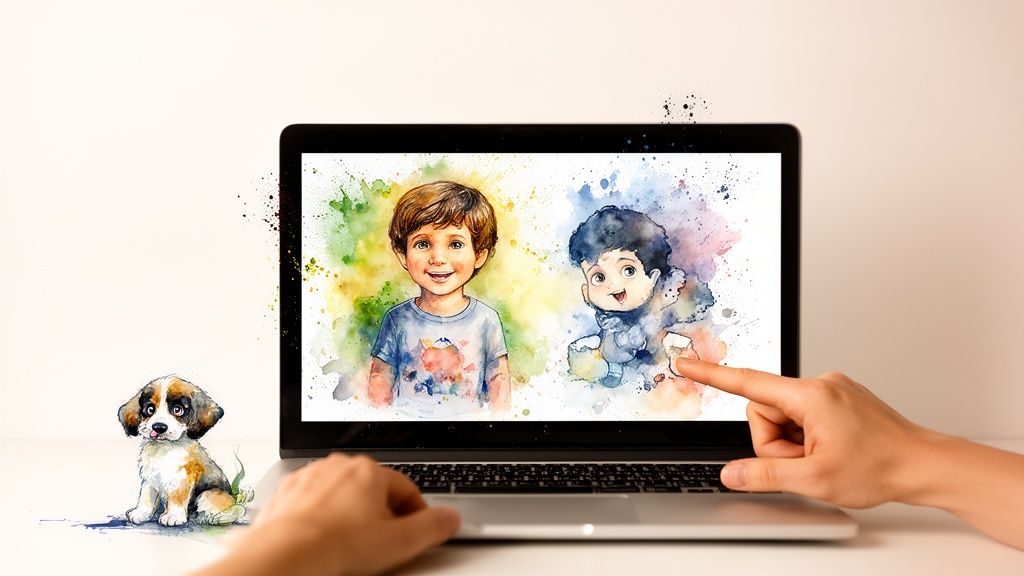
Here’s where the real magic happens. This is the moment your thoughtful story outline becomes a one-of-a-kind treasure for a child you love. Using modern tools like MioTales is like having a personal illustrator and co-author on call, ready to bring your specific vision to life. It’s how you make a child the undeniable hero of their very own adventure.
The whole process is surprisingly simple and a lot of fun. You can actually generate a custom character just by uploading a photo of the child. The tool intelligently creates an illustrated version of them that you can drop right into the story, creating an instant, powerful connection for your young reader.
Make the Child the Star of the Show
For a kindergartener, seeing an illustration that looks just like them is a game-changer. But the customisation can go so much deeper than just appearances. This is your chance to weave their entire world into the fabric of the story.
Think about all the little details that make the story uniquely theirs:
- Their Name: Seeing their own name in print throughout the book is brilliant for name recognition.
- Family and Friends: Why not add Mummy, Daddy, a sibling, or even their best friend as supporting characters?
- Beloved Pets: Have a furry, feathered, or scaly family member? They make the perfect sidekick for an adventure!
This level of detail makes the story profoundly personal. A tale about a brave knight is exciting, sure. But a tale about a brave knight named Aarav, who sets off with his little sister Priya and their dog Moti, feels real. It validates their life and their relationships, helping the story's message hit home.
Weave in Their Favourite Things
What is your little one completely obsessed with right now? Dinosaurs? Fairies? Big yellow diggers? Whatever their current passion is, you can build an entire story around it.
AI story generators let you select or type in specific themes to guide the plot. If you've got a budding astronaut on your hands, you can create a ten-page adventure about their very first trip to the moon. For a child who loves being outdoors, you could craft a story about them discovering a secret garden behind their house.
The ability to match the story's theme to a child's real interests is the secret to creating a book they'll ask for again and again. It guarantees you’re making something they will truly cherish.
This need for engaging, relevant content is clear in the children’s book market. In India, for instance, the market is poised to capture 13.65% of the Asia-Pacific share. This is part of a much larger trend, with the entire Asia-Pacific region holding 35.45% of a global market valued at over $13 billion. This growth is bolstered by forecasts that the Indian educational book sector will expand by about 19% in five years, showing just how much demand there is for quality learning materials.
Add Some Interactive Fun
A personalised storybook for kindergarten doesn't have to be a passive experience. You can build simple, interactive prompts right into the pages to pull the child directly into the action. It’s a fantastic way to boost engagement and help develop their comprehension skills at the same time.
Try adding little questions or calls to action into the text itself. These cues turn story time into a playful conversation.
- Get Them Moving: "Can you roar like the friendly dragon?"
- Encourage Observation: "How many red balloons can you find on this page?"
- Talk About Feelings: "The little fox looks sad. How do you think he is feeling?"
- Make Some Noise: "When the piglet jumped in the puddle, it made a big SPLASH! Can you make that sound?"
These small additions make the child an active participant, not just a quiet listener. And if you're looking for more guidance on building your story from scratch, our guide on how to make a storybook is a great place to start before you dive into the personalisation.
Bringing Your Storybook to Life: Printing and Sharing
You’ve done the creative work—you’ve poured your heart into a story, brought it to life with illustrations, and added that personal magic. Now for the best part: turning your digital storybook for kindergarten into something real you can hold in your hands. This is the moment your creation becomes a proper keepsake, ready to be read, shared, and loved for years.
But before you rush to print, it’s worth taking a moment for one last look. Think of it as the final polish. Reading the story out loud one more time is my favourite trick; it’s amazing how your ear will catch a clumsy phrase or a tiny typo that your eyes might have missed. It helps you feel the rhythm of the story, just like a child will.
The Final Pre-Flight Check
Running through a quick checklist now will save you from any "oops" moments later. A few extra minutes here ensures the finished book is something you're truly proud of.
- Consistent Tone: Does the story feel consistently cheerful, adventurous, or comforting all the way through?
- Clear Language: Are the sentences simple and direct enough for a little one to follow easily?
- Text and Image Harmony: Do the pictures on each page really match the story's action?
- Personal Details: This is a big one! Double-check the spelling of every name and personalised detail.
Once you’re happy with it, a platform like MioTales makes the next step incredibly simple. You can download a high-resolution, print-ready PDF that’s already formatted perfectly, whether you plan to print at home or send it to a professional service.
There's a special kind of magic in holding the first physical copy of a story you created. It transforms from a project on a screen into a family treasure, ready for countless bedtime story sessions.
From Screen to Page
When it comes to printing, you’ve got a couple of great options, and the best one really just depends on your budget and what you need the book for.
Printing at Home For a quick and easy version, printing at home is perfect. You can have a finished booklet in minutes just by printing the pages and stapling them together. My tip? Use a slightly heavier paper or cardstock. It gives the book a sturdier feel and makes it much easier for little hands to turn the pages without tearing them. This is a brilliant option for a classroom activity or just a fun afternoon project.
Using a Professional Service If you’re aiming for a gift-quality book that will last, I’d recommend using a local print shop or an online printing service. They can bind your story into a beautiful hardcover or a durable softcover book. That professional finish makes it feel like a "real" book from a shop and ensures it can survive plenty of enthusiastic readings. A professionally printed storybook for kindergarten makes an unforgettable present for a birthday or holiday.
No matter which path you choose, your story is finally ready to be shared. And don't forget the digital version! The PDF is easy to email to family and friends who live far away, so your wonderful creation can be enjoyed absolutely anywhere.
A Few Common Questions We Hear
When you first decide to create a storybook for a young child, a few questions almost always pop up. Let's walk through some of the most common ones we see from parents and teachers.
How Long Should a Kindergarten Story Be?
For the kindergarten crowd, think short and sweet. Aiming for a story that’s between 10 to 16 pages is a great sweet spot. This usually translates to about 200 to 400 words in total.
It's long enough to tell a complete, satisfying story but short enough to hold their notoriously short attention spans. The goal isn't a high page count; it's a narrative that feels just right.
What if I'm Not a Writer or an Artist?
This is easily the biggest hurdle for most people, but I promise it’s not the barrier it used to be. You absolutely do not need to be a professional author or a trained illustrator to create something beautiful.
Think of yourself as the director, not the entire production crew. With tools like MioTales, your job is to provide the core ideas—the child’s name, what they love, a fun theme—and the platform takes care of the professional-level writing and artwork.
The real magic comes from a story that connects with a child. Your personal knowledge of that child is infinitely more important than your own writing or drawing skills.
Is It Safe to Use My Child’s Photo?
This is a perfectly valid and crucial question for any parent. When you're using a service that creates a character from a photo, you must check their privacy policies.
Look for platforms that are upfront about how they handle your data. For instance, some services use the photo only to generate the character and then have systems in place to immediately and automatically delete it. Your child’s privacy should always come first, so stick with companies that are transparent about protecting it.
Ready to create a story that will be cherished for years to come? With MioTales, you can turn your ideas into a beautiful, personalised book in just a few minutes. Start your magical storytelling journey today.
Related Free Tools
If this post helped, these tools will help you keep going right away.
Great for: story prompts for kids
Story Prompts for Kids
Generate prompt ideas by age and theme.
Great for: short story prompts for kids
Short Story Prompts for Kids
Quick writing ideas for class and bedtime.
Great for: story starter for kids
Story Starter for Kids
Get first-line starters to begin writing fast.


