Creating Magical Bedtime Stories for Kids With Pictures
Learn how to create unforgettable bedtime stories for kids with pictures. This guide offers practical tips for storytelling, illustration, and personalization.
A good picture book at bedtime is more than just a way to settle down for the night; it's a doorway to new worlds and a fantastic tool for a child's growing mind. When words and pictures come together, they help little ones understand big ideas, learn new words, and, most importantly, create a warm, calming ritual before they drift off to sleep. It turns story time into a shared moment of magic.
The Power of Illustrated Bedtime Stories
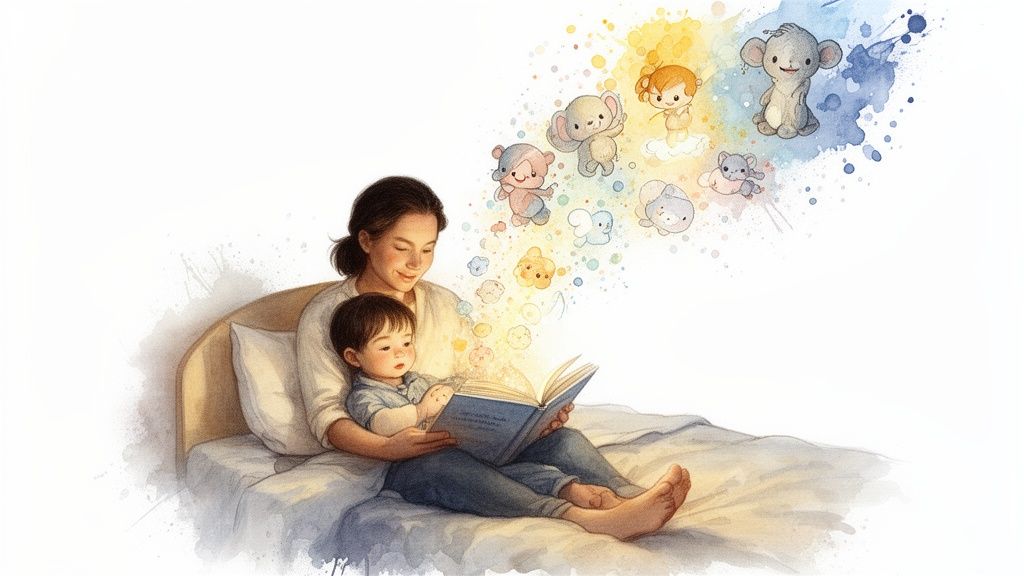
When you pair a great story with beautiful illustrations, you're not just reading a book—you're stepping into another world together. For a child, the pictures are their first guide. They offer clues that help them figure out new words and pick up on feelings and ideas that the text alone might not convey.
This visual partnership is absolutely vital for early reading skills. In fact, research shows that children who read illustrated books have a greater understanding of the story's vocabulary than those who only listen to the words. The images provide context, building a bridge between the words they hear and the text on the page. For a toddler, seeing a picture of a "grumpy badger" instantly links the new word "grumpy" to a face they can understand.
Building Emotional Connections and Routines
Beyond the learning, picture stories are brilliant for creating a soothing and predictable bedtime ritual. That consistency is a powerful signal to a child’s brain that it's time to slow down, making it much easier to fall asleep. It’s also a quiet, dedicated time to connect and cuddle at the end of a hectic day, strengthening your bond.
This nightly routine builds a powerful sense of security. Children thrive on knowing what to expect, and a familiar book with characters they love becomes a real source of comfort. It can help soothe away the day's worries. If you're looking for inspiration, you can explore some of the best bedtime stories for kids to see how masterfully they weave themes of comfort and safety into their tales.
A predictable bedtime story routine doesn't just prepare a child for sleep; it builds a foundation of emotional security that lasts a lifetime. It’s a quiet promise of safety and connection, delivered one page at a time.
The Magic of Seeing Themselves in the Story
The effect of an illustrated story skyrockets when the child gets to be the hero. Personalising a book turns reading from something they watch into an adventure they lead. When a child sees a character who looks like them and shares their name overcoming obstacles and celebrating victories, it’s an incredible boost to their confidence and sense of self.
Suddenly, it's not just a storybook; it's their storybook. That feeling of ownership is a game-changer. It can spark a genuine, lifelong passion for reading and make bedtime the part of the day they look forward to the most.
Tailoring Stories and Illustrations for Every Age
A story that has an eight-year-old on the edge of their seat might sail right over the head of a three-year-old. The real secret to creating a bedtime story that sticks? It’s all about matching the story’s complexity and the style of the pictures to where your child is right now.
Getting this right isn't just about keeping them from getting fidgety. It's about crafting an experience that speaks their language, making them feel seen and excited to turn the page.
Storytelling for Toddlers and Preschoolers (Ages 2–4)
For our littlest listeners, simple is always better. At this age, a child’s world is all about what’s right in front of them—cause and effect, familiar patterns, and big, straightforward feelings. They’re just getting the hang of how stories even work, so a clear, comforting structure is key.
The best stories for toddlers revolve around things they already know: daily routines, recognisable animals, or simple ideas like colours and sounds. Think of plots that answer one easy question, like, "Where did the little duck go?" or "Who ate the big, red strawberry?" This directness helps them follow along without feeling overwhelmed.
When you're putting together a story for this crowd, lean into these elements:
- Repetitive Phrases: A recurring line, like, "But the little bear was still hungry!" creates a fun, predictable rhythm that toddlers absolutely love to join in on.
- Simple Problems and Solutions: Keep the stakes low. A lost toy that’s quickly found or a rainy day that turns into a fantastic puddle-jumping adventure are perfect.
- Direct Emotional Language: Use clear, simple words for feelings—"happy," "sad," or "sleepy"—and make sure the illustrations show these emotions in a big, obvious way.
Visually, toddlers are drawn to bright, high-contrast colours and simple, bold shapes. Art styles like Bold Cartoons or classic Storybook illustrations with clean, easy-to-read lines are perfect. The pictures should be a direct reflection of the text, showing exactly what’s happening to help them connect the words to the action.
Engaging Early Readers (Ages 5–7)
Once kids hit the 5-7 age range, their world opens up. They can now follow more detailed plots, understand subtler feelings, and really appreciate a bit of suspense and humour. Their growing sense of independence means they connect with stories about relatable heroes who figure things out and learn something along the way.
This is the perfect age for tales about friendship, being brave, and discovering new things. The story can have a few more characters and a clear sequence of events—a beginning, a middle with a challenge, and a nice, tidy ending. A story about two best friends building a cardboard spaceship to visit the moon, for example, gives them a clear goal with plenty of room for imaginative fun.
At this stage, children are shifting from learning to read to reading to learn. The right story doesn't just entertain; it builds confidence and shows them that books are doorways to wonder and adventure.
Look for pictures that offer a bit more detail and nuance. Illustrations in a soft Watercolor style or a more intricate storybook aesthetic can add a layer of emotion and depth. These visuals can also hide little details not mentioned in the text, which encourages kids to pore over the pages and make their own discoveries. For a deeper look, our guide on choosing a great storybook for kindergarten has more specific tips for this important age.
Captivating Independent Thinkers (Ages 8+)
By age eight, kids have a much stronger sense of who they are and a more sophisticated view of the world. They’re ready for richer plots, characters who grow and change, and themes that dig into bigger ideas like fairness, empathy, and sticking with something even when it’s hard.
This is the golden age for adventure, fantasy, and mystery. They can juggle multiple plot lines, understand characters with tricky motivations, and even handle a bit of an open-ended conclusion. A story about a young detective solving a neighbourhood mystery or a hero setting off on a quest in a magical land will totally capture their imagination.
Here’s a quick reference guide to help you tailor your story perfectly.
Storytelling and Illustration Guide by Age Group
| Age Group | Ideal Story Elements | Recommended Visual Style | Example Theme (MioTales) | | :--- | :--- | :--- | :--- | | 2–4 Years | Repetitive text, simple cause-and-effect, familiar routines. | Bold, colourful Cartoon; Classic Storybook with clear lines. | A gentle story about a friendly animal preparing for bed. | | 5–7 Years | Relatable characters, clear problem-solving, themes of friendship and courage. | Expressive Watercolor; detailed illustrations with hidden details. | An adventure where the child and their best friend build a magical fort. | | 8+ Years | Complex plots, character growth, themes of adventure, mystery, and fantasy. | Cinematic 3D; nuanced illustrations that build atmosphere. | A quest to find a lost magical artifact in an ancient forest. |
For this older group, the illustrations really need to match the story's vibe. A cinematic 3D style can make an epic adventure feel huge and exciting, while more atmospheric, detailed art can create the perfect moody backdrop for a mystery. At this point, the pictures don't have to spell everything out; they can hint at action and emotion, leaving a little more room for the child's own imagination to fill in the gaps.
Making the Story Uniquely Theirs
A great story is wonderful, but a personalised one? That’s pure magic. This is where you shift from simply being a storyteller to becoming a true magic-maker, creating a world that revolves entirely around your child. It’s the difference between them just listening to an adventure and actually living it.
The easiest place to start is by making them the main character. It sounds simple, but using your child’s name in the story is an incredibly powerful move. The moment they hear their own name as the hero who finds the lost treasure or befriends the shy dragon, you’ve got their undivided attention.
This personal connection does more than just keep them hooked; it’s a quiet confidence booster. When they hear about a character with their name doing brave, kind, or clever things, it sends a powerful message: you can do this, too.
Weaving Their World into the Narrative
To make the story feel truly theirs, you need to go beyond just using their name. Think about the small, specific details that make up their world. These are the golden threads you can weave into the narrative to make it sparkle.
What kind of details work best?
- Beloved Pets: Does their scruffy terrier, Rusty, have a funny habit of stealing socks? Suddenly, he’s the hero’s loyal (and slightly mischievous) sidekick on the quest.
- Favourite Toys: That slightly worn teddy bear who’s seen better days can become a wise old advisor, offering cryptic but helpful advice.
- Best Friends and Family: Bringing their best friend, cousin, or a grandparent into the story makes the world feel familiar, safe, and instantly relatable.
- Silly Family Jokes: Remember that time everyone dissolved into giggles because Dad wore mismatched shoes to the shops? A small nod to a shared memory makes the story an inside joke just between you and your child.
Adding these personal touches makes the story feel grounded and real, even if it's set in a fantastical land full of wizards and goblins. It shows your child that their life, their friends, and their experiences are important enough to be in a storybook.
The infographic below shows how a child's reading journey evolves, and you can see how personalisation becomes even more vital as their own world expands.
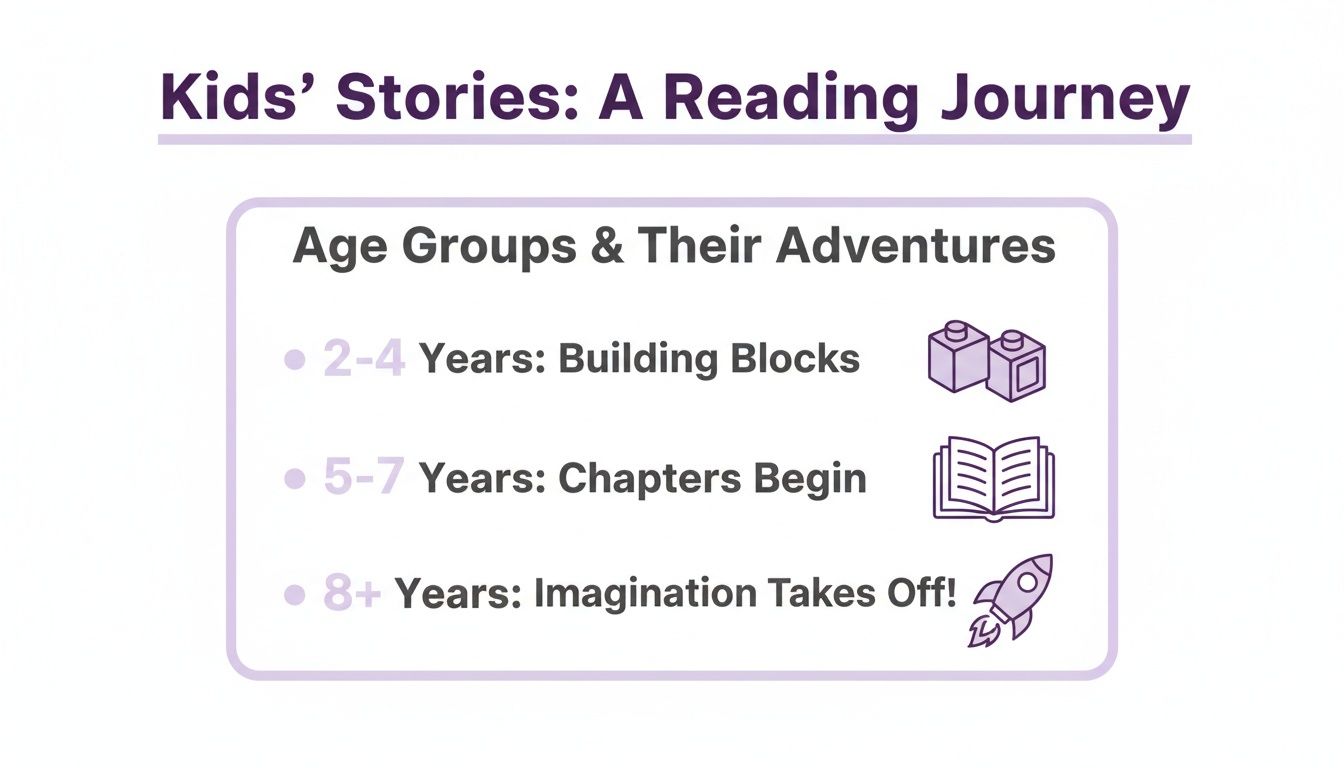
As kids get older, their appetite for more complex adventures grows, and weaving in those personal details is what keeps them truly invested.
Creating a Character from a Photo
Thanks to modern tools, personalisation has taken an exciting leap forward. Imagine your child not only hearing their name but seeing an illustrated character that looks just like them. Platforms like MioTales let you upload a photo to generate a custom character, putting your child right onto the page.
Honestly, this is a total game-changer. For a child, seeing a visual representation of themselves as the hero is an incredibly validating experience. It closes the gap between them and the narrative, making the adventure feel immediate and real. This visual link is especially powerful for younger children who are still learning to connect with characters through words alone. For more ideas on this, check out our guide on creating personalised story books with photos.
When a child sees an illustration of themselves bravely facing a dragon, it's not just a picture in a book. It’s a powerful affirmation of their own strength and potential, planting a seed of confidence that can grow long after the story is over.
The effect is remarkable. Seeing themselves in a positive light, solving problems and reaching goals, can have a noticeable impact on a child's confidence and their willingness to try new things in their own life. It’s a gentle, story-driven way of showing them just what they’re capable of.
The Lasting Impact of Personal Stories
Creating a personalised story isn’t just about making bedtime more fun—it’s a real investment in your child’s development. These unique tales foster a love of reading by making it a deeply personal and joyful activity.
They also build incredible memories. Your child will remember the stories where they were the star, where their dog was a hero, and where their own little world became the backdrop for a grand adventure. These custom-made stories become more than just books; they become treasured keepsakes from their childhood.
Choosing the Perfect Visual Style for Your Tale
Before you even read the first sentence, the pictures in a storybook have already started telling the tale. They set the mood, hint at the adventure to come, and are often the very first thing a child connects with. Picking the right visual style is a bit like being a film director choosing the perfect lighting and scenery—it can transform a simple narrative into a world your child can truly step into.
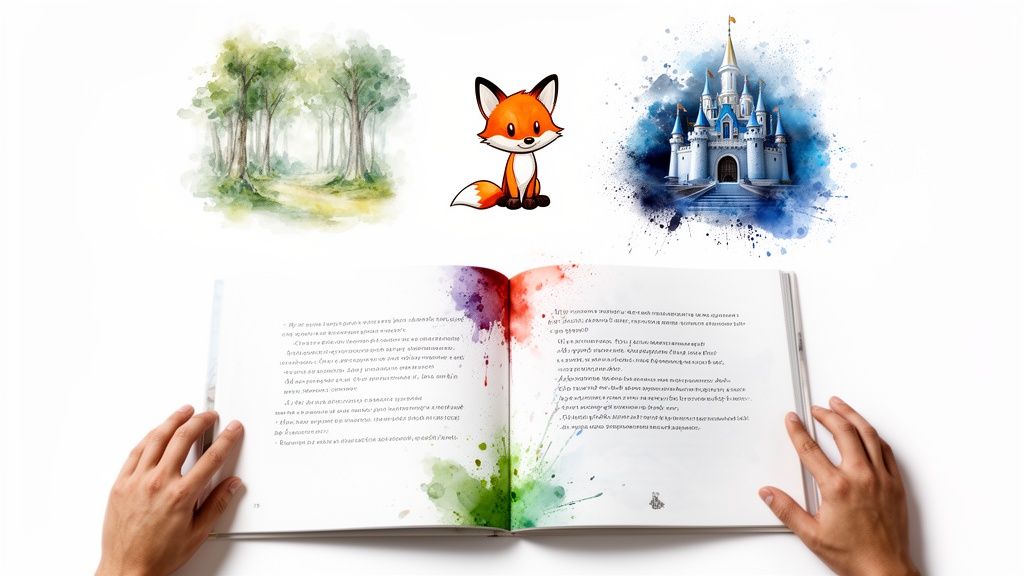
Think about the feeling you want your story to evoke. Is it a gentle, quiet story about a little bear searching for its cosy bed? A soft, dreamy Watercolor style, with its gentle blending of colours, would be perfect for creating that soothing, sleepy atmosphere.
But what if your story is a loud, zany adventure about a robot who accidentally bakes a cake out of socks? You’ll want something with more punch. The bold lines and bright, energetic colours of a Cartoon style would match that playful chaos perfectly. The visual language you choose has to work hand-in-hand with the text; when they’re in sync, the story just sings.
Matching Art Style to Narrative Tone
The real secret is to listen to the heart of your story. A thrilling quest needs visuals that feel dynamic and exciting. A quiet tale about kindness, on the other hand, works best with gentle, approachable art. When the style reinforces the story's message, it feels so much more authentic and powerful.
-
Classic Storybook: This style has a timeless charm, with detailed characters that feel both nostalgic and wondrous. It’s brilliant for fairy tales or adventures about courage and magic. Think of those beloved books from your own childhood—that familiar, comforting feeling is what this style delivers.
-
Modern 3D: For an epic sci-fi adventure or a fantasy quest across sweeping landscapes, a cinematic 3D style can make the story feel huge and breathtaking. The depth and realism pull you in, making a child feel like they're watching a blockbuster movie unfold on the page.
Finding the right fit is everything. Platforms like MioTales offer an incredible range of styles, giving you the creative control to find that perfect match for whatever world you’re dreaming up.
The art style isn't just decoration; it's a co-storyteller. It whispers the story's mood to the child, sets expectations, and builds an emotional foundation that the words can stand on.
Practical Tips for Selecting Your Style
When you’re ready to choose, try to see the options through your child’s eyes, not just your own. What will draw them in? Even better, pull them into the process! Letting them help pick the style is a fantastic way to get them excited about the story before it’s even finished.
A few more things to keep in mind:
- Character Personality: A goofy, funny character might look odd in a serious, realistic style. A bold, cartoonish look would do a much better job of capturing their high-energy spirit.
- The World of the Story: Is your tale set in a mystical, enchanted forest or a gleaming, futuristic city? Soft, organic styles are wonderful for natural settings, while a sleek, polished aesthetic is a better fit for a high-tech world.
- Your Child’s Age: This isn't a hard-and-fast rule, but younger children often respond well to bright, simple styles with clear outlines. Older kids, however, might get a kick out of more detailed and nuanced illustrations with hidden gems to discover on repeat readings.
Ultimately, your goal is to create a seamless experience where the words and pictures feel like they belong together. When you find that perfect visual match, you aren't just making one of the many bedtime stories for kids with pictures out there—you're crafting a complete, believable world your child can get lost in, night after night.
Tips for a Memorable Bedtime Reading Ritual
You’ve poured your heart into creating the perfect story, complete with beautiful pictures. But the magic really happens when you share it. How you read the story is just as important as the story itself—it’s what turns a book into a memory.
Setting the scene is the first step. Dim the lights, snuggle up, and put away phones and other distractions. This simple act creates a quiet bubble, signalling to your child that it’s time to leave the day's excitement behind and settle in for something special.
Pacing the Story for Sweet Dreams
Your voice is your most powerful tool here. It's so easy to rush through the pages, especially at the end of a long day when you're tired too. But try to be intentional and slow things right down.
Speak a little more softly and clearly than you normally would. Let a moment of silence hang in the air after a big moment in the story or just before you turn the page. This gentle, unhurried rhythm is incredibly soothing for an active mind and gives your child a chance to really soak in the words and the lovely illustrations you've chosen.
Using Voices Without Feeling Silly
Giving characters different voices can make a story so much more fun, but you don’t need to be a professional voice actor. Honestly, small tweaks can make a huge difference.
If you feel awkward doing over-the-top voices, don’t! Simple shifts are just as effective:
- A big, strong character? Just lower your pitch a touch and speak a bit slower.
- A tiny mouse? Try a slightly higher, quicker voice.
- A sleepy bear? You could add a little yawn or draw your words out softly.
The aim isn’t to put on a West End performance; it's about connection. Your child will adore the effort because it shows you’re right there with them in that imaginary world.
The most magical part of a bedtime story isn't the plot or the pictures; it's the quiet connection that happens between the reader and the listener. It’s a shared moment of calm in a busy world.
Asking Gentle Questions to Connect
Asking questions is a wonderful way to keep your little one engaged, but at bedtime, the timing and tone are everything. You want to invite connection, not stir up a new wave of energy.
Instead of big questions that need an energetic answer, try gentle, observational prompts.
- "I wonder what that little fox is dreaming about."
- "That cottage looks so cosy, doesn't it?"
- "Look at all the sparkly stars in that picture."
These kinds of comments encourage your child to look closer at the bedtime stories for kids with pictures and share a quiet thought, deepening the moment without revving up their engine.
Print Versus Digital at Bedtime
It's so handy to create stories on a screen, but we know that screen-free time before bed is best for helping little bodies wind down. The blue light from tablets and phones can really mess with their natural sleep signals.
This is where having a print-ready PDF is a game-changer. You get all the creative fun of making a personalised story on your device, but then you can print it out. This gives you the best of both worlds: a unique, custom-made physical book for a screen-free reading experience that also becomes a real keepsake they can hold onto.
A Soothing Ritual for Neurodiverse Children
For many neurodiverse children, a predictable bedtime routine is a source of immense comfort. A personalised story—where they are the hero and the adventure follows a familiar path—can be an incredibly powerful tool for creating stability.
Knowing exactly what to expect from their special book helps reduce end-of-day anxiety and builds a powerful sense of safety. The combination of their own name, familiar places or characters, and soothing illustrations makes the story a reliable anchor, helping them settle into a peaceful night’s sleep.
A Few Common Questions Answered
As you dive into creating your own bedtime stories, you'll probably find a few practical questions popping up. It's totally normal. These are the little details that can make a huge difference, and getting them right is what makes story time so special. Here are some of the most common queries I get from parents, with straightforward answers to help you feel confident.
How Long Should a Bedtime Story Be?
This is a big one, and the answer really depends on your child's age. What works for a seven-year-old could feel like an epic saga to a restless toddler. The whole point is to wind down and connect, not to rush through a story or have your little one fall asleep halfway through.
Here’s a rough guide I’ve found works well:
- For toddlers (ages 2-4): Short and sweet is the name of the game. Aim for about 5 to 10 minutes. That’s the sweet spot for holding their attention before they start wiggling.
- For early readers (ages 5-7): They can follow a more detailed plot now, so 10 to 15 minutes is perfect. This gives you enough time for a simple adventure with a beginning, a middle, and a satisfying end.
- For older kids (ages 8+): They often love getting lost in a good story. You can stretch it to 20 minutes, especially if you're reading a chapter from a longer tale that leaves them excited for the next night.
This is where a creation tool that lets you set the page count becomes a lifesaver. It helps you make sure your bedtime stories for kids with pictures always finish on a calm, happy note, right on cue for lights out.
What if My Child Doesn't Like the Pictures?
This happens more often than you'd think, and it can really derail a story session. A child’s connection to the art is a huge part of the experience. If they don’t click with the visual style, it’s hard for them to get into the story.
This is exactly why creating your own book is so powerful. You're not stuck with a single artist's interpretation. If a dreamy, watercolour style isn't grabbing their attention, you can switch it up and try a bold, fun cartoon look for the very next story you create.
"One of my best tips is to involve your child in choosing the art style. It’s a simple way to get their buy-in and makes them feel a sense of ownership. Suddenly, they're not just a listener; they're a co-creator."
Show them a few different options before you start. Ask them, "Which of these looks like our adventure?" When they get to pick, they're already invested and excited to see what happens next.
Is It Better to Read From a Book or a Screen?
Most sleep experts agree that screens before bed aren't ideal. The blue light from tablets and phones can mess with melatonin, the hormone that tells our bodies it's time to sleep.
But that doesn't mean you can't use digital tools. My favourite approach is a hybrid one: create the story on a digital platform, but read it from a physical copy. I look for tools that let me download a print-ready PDF.
This way, you get the best of both worlds. You can use powerful software to craft a truly personalised story with stunning illustrations, and then print it out for a cosy, screen-free cuddle on the couch. As a bonus, you get a beautiful keepsake you can read over and over again.
How Can I Make a Personalised Story Feel Genuine?
It’s all in the details. To make a story feel like it was truly made for your child, you need to go beyond just adding their name. The real magic happens when you weave in the tiny, specific things that make up their world.
Think about those little quirks and inside jokes. Mention their favourite red wellies, the silly name they have for their grandpa, or that one time the cat tried to climb the curtains. When you embed these real-life nuggets into a fantastical story, it creates a secret world that belongs just to the two of you. That's what makes it feel authentic and truly special.
Ready to create a story your child will treasure forever? With MioTales, you can bring their unique world to life with custom characters, beautiful illustrations, and endless adventures. Start creating your first personalised storybook today!
Related Free Tools
If this post helped, these tools will help you keep going right away.
Great for: story prompts for kids
Story Prompts for Kids
Generate prompt ideas by age and theme.
Great for: short story prompts for kids
Short Story Prompts for Kids
Quick writing ideas for class and bedtime.
Great for: story starter for kids
Story Starter for Kids
Get first-line starters to begin writing fast.