How to Write Your Own Story Your Child Will Cherish Forever
Discover how to write your own story that makes your child the hero. This guide offers practical tips for creating a personalized book they'll love.
The process of writing your own story really just comes down to a few key ingredients. You need a great idea, a hero your child will adore, a simple plot to follow, and those special personal touches that make it truly theirs. The goal isn't to write the next bestseller; it's to create something that makes your child feel like the star of their own world.
The Unique Magic of a Story Made Just for Them
Can you picture it? That look of pure delight on your child's face when they realise the hero of the story is them. This guide is here to help you turn that beautiful thought into a real, tangible keepsake they can hold onto for years to come. We’re not aiming for a literary award here; our goal is something much more personal and powerful.
We're going to craft a story that speaks directly to your child, making them feel seen, celebrated, and completely special. This is about building more than just a book—it’s about creating a treasure that can boost their confidence and spark a lifelong love for reading.
Why a Personalised Story Matters
A personalised book is more than just a novelty; it’s a powerful tool for connection. When children see themselves as the main character, it validates their feelings and experiences in a way that no other story can. This isn't just another tale about a dragon in a faraway land; it’s their adventure.
The benefits are real and lasting:
- Boosts Self-Esteem: Putting them at the centre of the action reinforces a positive self-image and shows them they’re capable of amazing things.
- Encourages Reading: A story that includes their name, their friends, or even their scruffy dog makes reading feel incredibly relevant and exciting. It turns story time into an event.
- Strengthens Bonds: The simple act of creating and reading a book together builds a unique connection, creating shared memories around a story you made just for them.
The real magic is in the details. Mentioning their favourite red wellies or the name of their best friend is what transforms a simple story into an unforgettable experience. It shows them you're paying attention.
This guide will walk you through the entire creative process, from that first spark of an idea to holding a finished, beautifully illustrated book in your hands. Using a tool like MioTales lets you browse through different story examples and handles all the technical stuff, so you can focus on what really matters—the heart of the story.
Finding Your Story Idea and Main Character
Every truly great children's story starts with a simple spark—an idea that feels like magic and a hero your child can see themselves in. This is where the fun begins. You don't need some grand, complicated plot; honestly, the best and most beloved stories often spring from the simplest, most everyday things.
Think about what makes your child's eyes light up. Are they roaring like a dinosaur all day, dreaming of blasting off to distant galaxies, or whispering secrets to the squirrels in the back garden? Their current obsessions are a goldmine. You could also start with a value you want to share, like the quiet power of kindness or the courage it takes to try something new.
Tapping into Their World for Ideas
The best way to find a story is simply to watch and listen. A casual question like, "If you could go on an adventure right now, where would we go?" can unlock a world of possibilities. Whatever they say, that's your starting point.
Here are a few places I often find inspiration:
- Their Daily Life: A trip to the park isn't just a walk; it's a quest to find a hidden treasure map. A visit to Grandma's house becomes an expedition to a faraway kingdom with the best biscuits in the land.
- Their Favourite Toys: What if their beloved, scruffy teddy bear could talk? Imagine the secrets it would share! Centring a story around a favourite toy creates an instant, powerful connection.
- A Gentle Nudge: A story about a little hero who finds the courage to sleep without a nightlight, or who makes a new friend on the first day of school, can be incredibly empowering and comforting.
The most magical stories almost always have one foot in reality. When you weave familiar people, places, and feelings into a fantastic setting, you create a world that feels both wonderfully imaginative and completely believable to a child.
Right now, just gather ideas. Don't stress about the plot or the ending. Let your imagination (and your child's) run wild until you land on something that just feels right. If you're drawing a blank, our guide with story prompts for kids has plenty of sparks to get you started.
Bringing Your Little Hero to Life
With an idea in hand, it's time to cast the star of the show: your child. This is where the story becomes uniquely theirs. The goal is to create a character who doesn't just share their name but actually feels like them. With a tool like MioTales, this part is incredibly easy—you just upload a photo, and our AI instantly crafts a character that looks just like them.
But the magic doesn't stop there. Now you can layer in their personality. Is your child shy and thoughtful, or are they a bold adventurer who leaps before they look? Do they have a special giggle or a funny catchphrase? Sprinkling in these small, true-to-life details is what makes the character breathe.
And don't forget their loyal crew! Adding a best friend, a sibling, or even the family dog as a sidekick makes the story's world feel so much richer and more familiar. These supporting characters can lend a hand, provide a few laughs, and make sure the hero's journey never feels lonely.
It's amazing how a little encouragement at home can foster a love for creativity. For instance, in England, the Children and Young People's Writing report found that 61.8% of children in the North East enjoy writing for fun—a figure that's well above the national average. It just goes to show that sparking that interest early on, like with a personalised story, can make all the difference. You can discover more insights from this writing report if you're curious.
Choosing the Right Tone and Theme
The theme you choose really sets the stage for the whole adventure. It’s the feeling or the core message woven throughout the story. A "Bedtime" theme, for example, will naturally have a calm, gentle rhythm, while an "Adventure" theme should be buzzing with energy and discovery.
To help you decide, here’s a quick look at some popular themes on MioTales and the age groups they tend to work best for.
Choosing the Right Theme for Your Story
| Theme | Best for Age Range | Core Elements | Example Story Idea | | :--- | :--- | :--- | :--- | | Adventure | 5-13 years | Quests, exploration, challenges, teamwork | A journey through a magical jungle to find a lost city. | | Fantasy | 5-13 years | Magic, mythical creatures, enchanted worlds | Befriending a baby dragon and teaching it how to fly. | | Bedtime | 2-7 years | Calm, soothing, repetitive, reassuring | Helping a little star find its way back to the moon. | | Educational | 2-10 years | Learning, discovery, curiosity, problem-solving | A trip inside a giant clock to learn how to tell time. |
Once you have a theme, picking the setting is the final piece of the puzzle. It could be somewhere they know and love, like their own back garden, or a fantastical world full of shimmering trees and talking rivers that you invent together. The most important thing is to create a backdrop that feels like the perfect stage for their grand story to unfold.
Structuring a Plot That Captivates Young Readers
Every great story needs an engine, and for a child, that engine is the plot. It’s what keeps them hooked, turning the page (or begging you to), desperate to find out what happens next. You don't need a convoluted, twisty narrative. In fact, for kids, the best plots are often the simplest: a clear beginning, a muddle in the middle, and a satisfying end.
Think of it like this: you set the scene, introduce a small, manageable problem, and then guide the hero to a joyful solution. This classic three-act structure gives children a comforting sense of order. They feel safe and excited because they trust that everything will be wrapped up neatly by the final page.
Pacing the Adventure for Different Age Groups
The trick is to match the rhythm of your story to your reader's attention span. A tale that mesmerises a seven-year-old might completely lose a toddler, so you need to adjust your pacing.
-
For Toddlers (Ages 2-4): Simplicity is everything. Focus on a direct cause-and-effect storyline. For instance, "Leo the Lion cub lost his favourite red ball. Where did it go? Oh, look! It rolled under the big green chair!" The problem and solution are immediate and easy for them to connect.
-
For Early Readers (Ages 5-7): You can introduce a slightly bigger, but still solvable, challenge. Your hero wants something, faces a minor obstacle, and figures out how to overcome it. "Zara wanted to fly her kite, but there was no wind! So, she and her dad built a super-fast paper aeroplane instead and had a race."
-
For Older Kids (Ages 8-13): Now you can add more layers. The problem can be more emotional, and the hero might need to grow a little to solve it. A 'quest to find a lost necklace' could involve following clues, asking for help, and maybe even overcoming a fear of asking the grumpy-looking neighbour if they've seen it.
Once you have that spark of an idea, it naturally flows into defining your hero and the world they'll explore.
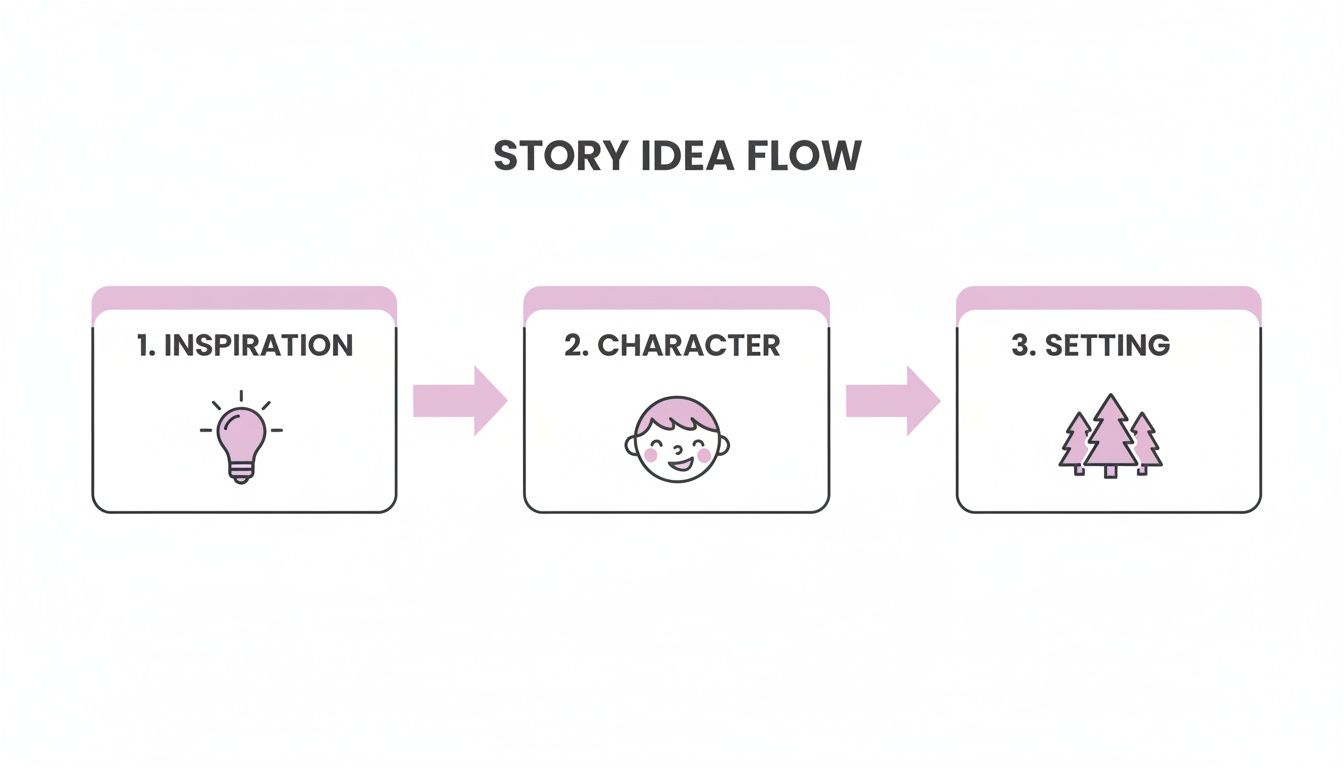
This journey from a single idea to a fully-formed world is the foundation of your plot, and it’s where the real magic begins.
Using Page Count to Guide the Pace
One of the best tools you have for controlling the story's pace is its length. A shorter book naturally leads to a quicker resolution—perfect for the youngest readers. More pages give you room to build a bit of suspense and let the character's journey unfold.
With a tool like MioTales, you get to set the length yourself, from a short 6-page board book-style adventure to a more detailed 20-page tale. This is brilliant for matching the story's complexity to your child's developmental stage. A 6-page story can introduce a simple narrative without ever feeling overwhelming, while a 20-page book gives an older child a richer plot to sink their teeth into.
A well-paced story is a story that respects a child's attention span. The goal isn't just to tell a tale, but to keep them completely captivated until the very last word.
This is especially important right now. Research shows that some children, particularly young boys, are losing their enjoyment of writing. One report noted a significant drop in writing enjoyment among boys aged 5-8. Creating a short, punchy, personalised 6-page book can be a fantastic, unintimidating way to re-engage them with stories. It turns them from a passive listener into the hero of their own adventure.
By helping your child create their own story, you’re not just having fun; you’re actively building confidence and boosting essential literacy skills. You can explore more about childhood writing statistics to get a fuller picture of why this matters so much.
Adding Personal Details That Make the Story Shine
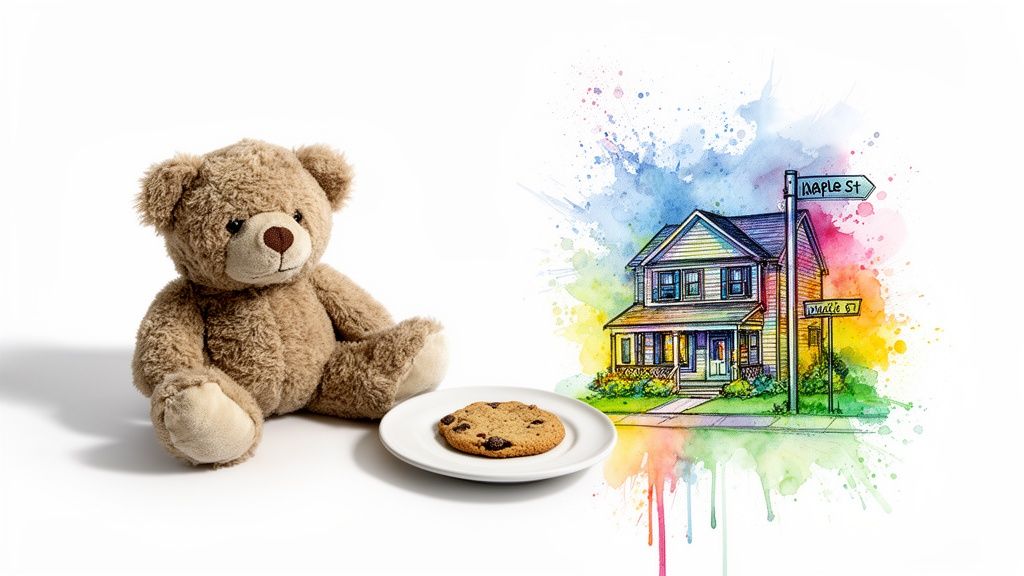
Here’s where we get to the real magic. This is the part where you sprinkle in those tiny, specific details that turn a good story into a treasured keepsake. It's how your child doesn't just see a character with their name, but truly sees themselves as the hero of the adventure.
The secret is weaving in the little things that feel like they belong only to your child. These details create a powerful spark of recognition, that "Hey, that's me!" moment that makes them feel truly seen. It’s what makes a personalised story feel like a warm hug.
Weaving in Those Unforgettable Details
Think about the quirks, favourites, and inside jokes that make up your child's world. These are your most powerful storytelling tools. When the hero of your story munches on the same crunchy carrot sticks your kid loves, or wears a superhero cape just like the one hanging in their wardrobe, the connection is immediate and powerful.
With a tool like MioTales, you can easily thread these specifics right into the narrative. Some ideas to get you started:
- Favourite Foods: Does their face light up for buttery naan or Friday night pizza? Put it in the story.
- Beloved People: Weave in a special appearance by a grandparent, a favourite cousin, or even a cherished teacher.
- Familiar Places: Maybe the adventure starts on their own street or in the local park they visit every weekend.
- Inside Jokes: A subtle nod to a funny family phrase or a silly memory you both share can be incredibly special.
These personal touches are the threads that stitch the story directly into your child's heart. More than anything, they show you’ve been paying attention to their unique world.
The goal isn’t just to entertain; it’s to reflect your child's life back to them in a magical way. It’s in these specific, personal details that a book finds its soul.
This kind of personalisation also plays a huge part in representation. While the world of children's literature is getting better, a recent analysis showed that while 40% of children's books featured BIPOC primary characters, there's still a long way to go. By creating a custom story, you guarantee your child sees a hero who looks, lives, and feels just like them. You can explore more about these diversity statistics to see just how much this matters for young readers.
Crafting a Voice That Speaks to Them
The way you tell the story is just as important as what happens in it. The voice and language should feel natural and engaging for your child's age, pulling them right into the world you've built.
For the little ones, say ages 2-4, think rhythm and repetition. Simple, predictable phrases have an almost hypnotic effect that's perfect for little ears. Think "Down, down, down the hill he rolled," or the classic "Snug as a bug in a rug." They're comforting and easy to latch onto.
For older kids, you can get a lot more descriptive and evocative. Don't just say, "The forest was big." Try something like, "The ancient trees stretched their leafy arms towards the sky, casting long, dancing shadows on the mossy ground." This paints a much richer picture and invites their imagination to fill in the rest.
Choosing the Perfect Tone
The tone sets the emotional mood of your story right from the first sentence. Are you aiming for a whimsical, giggly adventure or a calm, soothing bedtime tale? The tone should fit the story's theme and, just as importantly, your child's personality.
Think about how different tones can shape the experience:
- Whimsical and Playful: This is your go-to for stories packed with silly characters and funny situations. Use lighthearted language and delightful, unexpected twists to keep them laughing.
- Adventurous and Exciting: Perfect for quests and mysteries. You'll want to build anticipation with dynamic, action-packed words that create a feeling of forward momentum.
- Calm and Reassuring: This is the sweet spot for bedtime stories or tales about overcoming small fears. A gentle, soothing voice with a soft, comforting ending can help ease a child into sleep.
With MioTales, you can actually guide the AI to adopt a specific tone, making sure the final story has exactly the feeling you’re going for. This gives you the control to craft a story that speaks directly to your child's emotional needs and makes story time a truly personal experience.
Bringing Your Words to Life with Illustrations
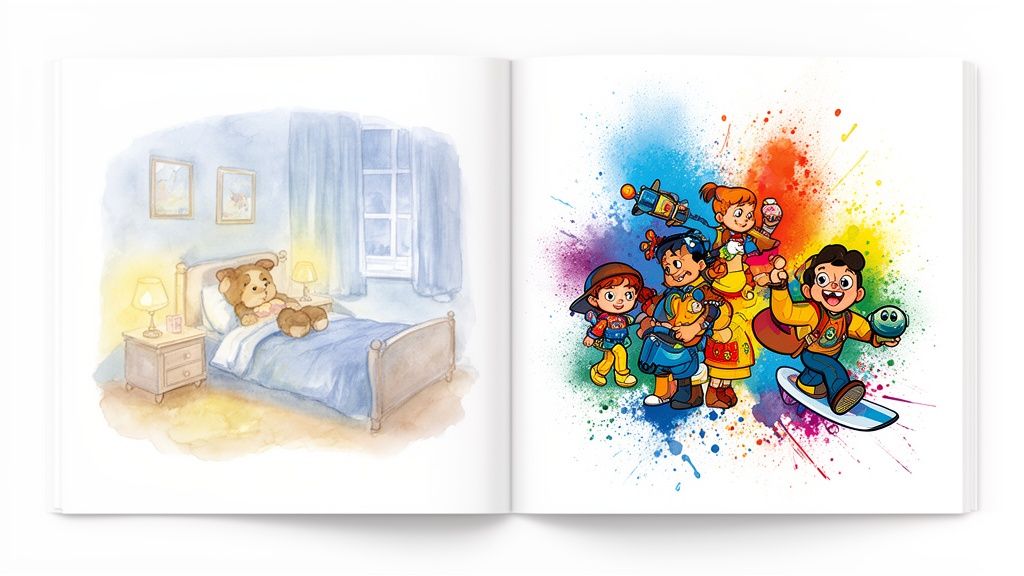
In any children’s book worth its salt, the pictures are just as important as the words. They're a team, working together to build a world a child can truly get lost in. This is where your story makes the leap from text on a screen to a vibrant, immersive experience. The right illustrations don't just show what's happening—they set the whole mood.
Just think about it. Soft, dreamy watercolours feel perfect for a gentle bedtime story, while the bold, energetic lines of a cartoon are a natural fit for a high-octane adventure. Every style tells its own story, and getting this right is a huge part of crafting a book that connects with a young reader.
Choosing an Art Style That Fits Your Tale
The art style you pick becomes the visual heartbeat of your book. It needs to echo the tone of your writing and, most importantly, the personality of your little hero. Thankfully, with a platform like MioTales, you don’t need to be an artist to make this happen. You just need to be the director.
You get to choose from a whole gallery of beautiful styles, and the AI will generate unique illustrations that match your text on every single page.
Here are a few popular options you'll find:
- Classic Storybook: This one has that timeless, nostalgic feel. It's warm, inviting, and perfect for fairy tales or heartwarming family stories.
- 3D Animation: If your story is a thrilling adventure or a futuristic quest, a 3D style like you see in modern animated films gives it a cool, cinematic quality.
- Watercolor: I love this style for calming bedtime stories or tales that touch on gentle emotions. It creates such a dreamy, soothing atmosphere.
- Cartoon: Got a story packed with laughs and action? A bright, bold cartoon style is your best bet. It’s fun, energetic, and grabs a child’s attention instantly.
The trick is to match the visual style to the emotional core of your story. When you get that right, the world you’ve built feels consistent and so much more believable.
Thinking Like an Art Director
Once you’ve settled on a style, your next job is to guide the illustrator—in this case, the AI—to create the perfect images. Your text essentially becomes the prompt, so the more descriptive you are, the better the result will be. You don't need to write a novel for each page; just a few key details can make all the difference.
For instance, instead of writing, "The boy walked through the forest," try something like, "Brave little Sam tiptoed through the spooky forest, where tall, shadowy trees reached for the moon." See the difference? That extra detail gives the AI so much more to work with, leading to a richer, more atmospheric picture.
The best illustrations do more than just show the action; they leave a little room for a child’s imagination to fill in the gaps. Your words provide the map, but the pictures should invite them to explore.
By giving clear—but not overly restrictive—descriptions, you ensure the illustrations follow the plot while still encouraging the child to wonder and dream.
From Digital Magic to a Physical Keepsake
After you’ve paired your story with the perfect visuals, there’s one last, wonderful step: bringing it into the real world. A digital story is great, but there’s something truly special about holding a physical book in your hands. It’s a tangible piece of the magic you’ve created.
MioTales makes this part easy. You can download your entire book as a high-quality, print-ready file. This file is already formatted to make sure the colours pop and the text is crisp, so you can take it to a local printer or use an online service to create a beautiful, professionally bound book.
This final step transforms your project from a fun activity into a lasting family heirloom—a real-life reminder of the unique adventure you crafted just for them.
Turning Your Draft into a Cherished Keepsake
You’ve done the hard work. The story is written, the illustrations are in place, and you're so close to the finish line. This final step is all about polishing your story until it shines, turning a good draft into a treasured book.
This isn't about being your own harshest critic. Instead, think of it as lovingly tending to a garden—a little trim here, a little tweak there—to help it truly flourish. The best tool you have for this job? Your own voice.
The Read-Aloud Test and Other Simple Checks
Before you hit "publish" or "print," take a moment to run through a few final checks. This is how you catch the little things that make a big difference.
- Read the story out loud. This is the one thing you absolutely can't skip. When you hear the words, you’ll immediately spot any clunky sentences or awkward phrasing. If a sentence makes you stumble, you can bet a child will get tripped up too. The goal is a smooth, natural rhythm.
- Hunt for inconsistencies. Did the brave knight’s horse have a white star on its forehead on page 3, but not on page 10? Was Grandma's name spelt "Anne" in one spot and "Ann" in another? Little details like these can break the spell of a good story.
- Double-check every single personalised detail. The whole point is the magic of seeing your child in the story. A misspelled name or the wrong favourite colour can pull them right out of the world you’ve built.
Using a tool like MioTales makes these final edits feel less like a chore. The editor is built right in, so you can easily tweak the text, adjust character details on the fly, and even ask the illustrator to try a scene again if it doesn’t quite match what you had in mind. For a deeper dive into the whole process, our guide on how to make a storybook from start to finish is a great resource.
Sharing the Magic You’ve Made
Alright, this is the moment you've been waiting for. It's time to share the incredible story you’ve brought to life. Watching a child’s face light up when they open a book made just for them is a feeling you’ll never forget.
The real joy of writing your own story isn't just in the creation, but in the connection it builds. A book you've made becomes a shared experience, a new bedtime ritual, and a tangible piece of your family's history.
And this gift can be shared in so many wonderful ways:
- The Perfect Present: A personalised book is an unforgettable gift for a birthday, a holiday, or just because. It shows you put thought and love into it, which means more than any toy off the shelf.
- A New Bedtime Favourite: Imagine snuggling up and reading your story together every night. It’s a powerful way to bond and create a lifelong love of reading.
- An Amazing Classroom Resource: For teachers, creating a story featuring their students is a fantastic way to make learning feel special. It can be a great reward or a fun way to introduce a new topic.
Because you can create and download unlimited stories, every new idea is a new adventure waiting to happen. Go on, make some magic.
Got Questions About Making Your Own Story?
Stepping into the world of story writing for your child can feel a little daunting. It's totally normal to have a few questions pop up, especially when you're aiming to create something that’s just right for them. Let's tackle some of the things parents often ask.
How Long Should My Story Be?
One of the first things people wonder is about the perfect story length. The honest answer? It really comes down to your child's age and, let's be real, their ever-changing attention span.
- Toddlers (Ages 2-4): Think short and sweet. A 6-10 page book is fantastic for this group. It’s just enough time for a simple, engaging plot without losing them before the last page.
- Early Readers (Ages 5-7): You can stretch things out a bit here, aiming for 10-16 pages. This gives you the space to introduce a little problem for your hero to solve and wrap it up nicely.
- Older Kids (Ages 8-13): Go for it! A longer adventure of 16-20 pages allows for richer characters, a more detailed plot, and a bit more emotional depth.
When you're using a tool like MioTales, you can set the page count from the get-go, so it’s easy to get the length just right.
But What if I'm Not a Writer or an Artist?
This is a big one. So many parents feel they don't have the "skills" to create a proper book. Here's the good news: you don't have to be a professional author or a trained illustrator. Your job is to be the expert on your child.
That's where technology comes in to lend a hand. Platforms like MioTales are built to do the heavy lifting. The AI helps you structure the story and then generates completely original illustrations based on your descriptions and the style you choose. All you need to bring is the heart—the idea for the hero, the theme, and all those little personal details only a parent would know.
You are the keeper of your child's world. Your ideas and personal touches are the most crucial ingredients. The technology is just there to help you bring that vision to life beautifully and effortlessly.
Is It Safe to Use My Child's Photo?
Privacy is, of course, a huge concern, especially when you're adding personal details. It’s natural to wonder if it's safe to upload a photo to create a character that looks like your child. The short answer is yes.
Reputable platforms are designed with privacy at their core. A service like MioTales uses the photo only for the one-time job of generating the character for your story. As soon as the book is created, that original photo is automatically and permanently deleted. Your child's data is never stored, so you can create with complete peace of mind.
Can I Add Other Family Members?
Absolutely, and you definitely should! Bringing in siblings, grandparents, cousins, or even the beloved family dog is a wonderful way to make the story's world feel warm and familiar. It takes the book from being a fun little adventure to a cherished family keepsake.
Ready to create a story your child will never forget? With MioTales, you can bring your ideas to life in minutes with beautiful illustrations and a story made just for them. Start your magical storybook adventure today!
Related Free Tools
If this post helped, these tools will help you keep going right away.
Great for: story prompts for kids
Story Prompts for Kids
Generate prompt ideas by age and theme.
Great for: short story prompts for kids
Short Story Prompts for Kids
Quick writing ideas for class and bedtime.
Great for: story starter for kids
Story Starter for Kids
Get first-line starters to begin writing fast.