10 Timeless Stories for Preschoolers to Spark Imagination in 2026
Discover 10 classic stories for preschoolers that build literacy and emotional skills. Get read-aloud tips and ideas for creating personalised tales.
In a world of fleeting distractions, the magic of a well-told story remains one of the most powerful tools for a preschooler's development. Classic stories for preschoolers are not just for entertainment; they are foundational pillars for literacy, emotional intelligence, and imagination. They provide familiar rhythms, comforting characters, and timeless lessons that help young minds make sense of their world. From the simple joy of counting with a hungry caterpillar to understanding unconditional love through the eyes of a compassionate spider, these narratives create shared experiences that strengthen family bonds and build a lifelong love for reading.
This roundup revisits 10 iconic tales that have captivated generations. For each classic, we will explore precisely what makes it special and provide practical, actionable tips to make your read-aloud sessions more dynamic and memorable. We'll delve into specific ways to engage your child, from using different voices to incorporating simple, hands-on activities. Furthermore, we will show you how to extend the magic of these beloved books by creating your own personalised adventures using MioTales, turning your child from a passive listener into the star of their very own tale.
1. The Very Hungry Caterpillar by Eric Carle
This timeless classic follows a tiny, new caterpillar on its journey to becoming a butterfly. Over one week, it eats through an increasing number of foods, from one apple on Monday to a surprising feast on Saturday. The book’s simple narrative, repetitive text, and unique die-cut pages make it one of the most engaging stories for preschoolers available.

It masterfully teaches foundational concepts such as counting, the days of the week, and the names of different foods. The story’s core theme of metamorphosis helps children understand growth and change in a gentle, visual way. This concept is a powerful springboard for personalisation, allowing a child to imagine themselves as the hero transforming and growing, a key feature in MioTales story creation.
Why It Works for Preschoolers
The book's success in over 4 million classrooms worldwide stems from its interactive and developmental design. The repetitive structure builds confidence in pre-readers, while the vibrant, collage-style illustrations capture their attention.
- Builds Familiarity: Read it multiple times to help your child memorise the pattern.
- Encourages Prediction: Pause before turning a page and ask, "What do you think he will eat next?"
- Connects to Science: If possible, observe real caterpillars to bring the life cycle concept to life.
- Sparks Personalisation: Use it as inspiration for a personalised MioTales story where your child is the one transforming and growing.
- Teaches Colours & Foods: Ask questions like, "What colour is the plum?" during the read-aloud.
Its enduring appeal and educational value make it a cornerstone of early childhood literacy. To keep track of this and other reading adventures, you can download a printable reading log to celebrate each story you share.
2. Goodnight Moon by Margaret Wise Brown
This quintessential bedtime classic gently guides a little bunny through his evening ritual of saying goodnight to everything in his "great green room." The story’s soothing, rhythmic prose and lulling repetition create a peaceful atmosphere, making it one of the most beloved stories for preschoolers to wind down with at the end of the day.
It masterfully teaches object identification and the concept of routine, providing comfort and predictability for young minds. The calming narrative arc helps children transition from the activity of daytime to the quiet of nighttime, a core principle of healthy sleep habits. This simple ritual is a perfect model for a MioTales story, where a child can say goodnight to their own special toys and familiar surroundings.
Why It Works for Preschoolers
Recommended by child sleep specialists, its power lies in its predictable, calming structure. The simple, repetitive "Goodnight..." refrain allows children to anticipate the text, building pre-reading skills and a sense of security before sleep.
- Establishes Routine: Read it at a consistent time each night to signal that it's time to rest.
- Encourages Observation: Point to the objects in the illustrations and then find similar items in your child's own room.
- Creates a Calm Atmosphere: Use a soft, quiet voice and dim the lights to enhance the soothing effect of the story.
- Sparks Personalisation: Create a personalised MioTales story where your child says goodnight to their favourite things in their own room.
- Builds Vocabulary: Name the objects clearly: "Goodnight comb," "Goodnight brush."
Its timeless appeal makes it a foundational piece of early childhood literature and an essential part of a peaceful bedtime. For more excellent reads, explore our curated list of story books for 4-year-olds.
3. Where the Wild Things Are by Maurice Sendak
This Caldecott Medal-winning classic tells the story of Max, a mischievous boy in a wolf suit who is sent to his room without any supper. His room transforms into a jungle, he sails to an island of "Wild Things," and becomes their king. This narrative wonderfully balances imaginative adventure with the profound reassurance of returning home to parental love, making it one of the most beloved stories for preschoolers.
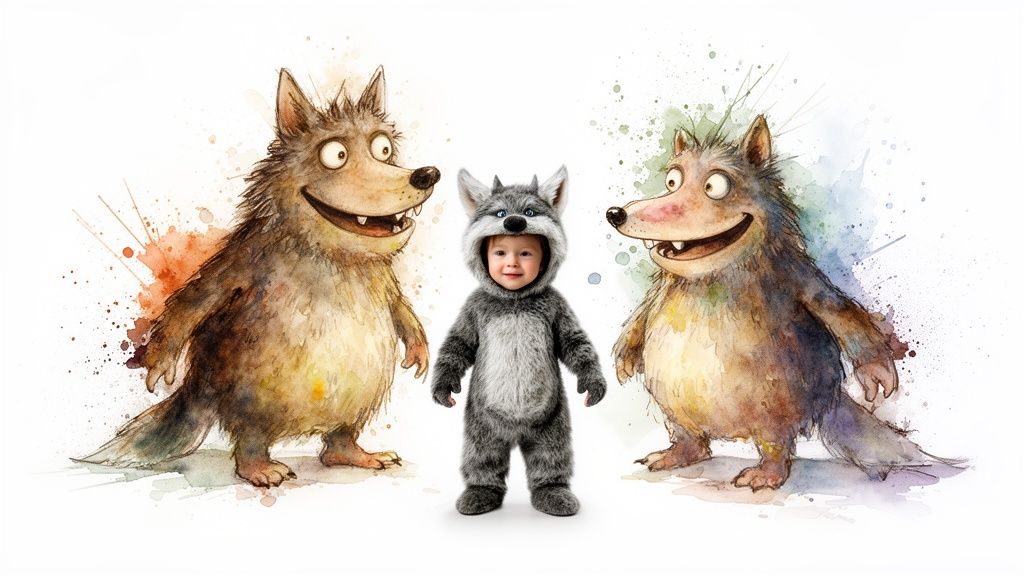
The story masterfully validates a child's big emotions like anger and frustration, showing that it’s okay to feel "wild" sometimes. The unique way the illustrations grow to fill the pages mirrors Max’s escalating fantasy, before receding as he chooses to return home. This journey provides powerful comfort, showing that love and a warm supper will always be waiting. This emotional validation is a key principle in creating a meaningful storybook for kindergarten and beyond.
Why It Works for Preschoolers
The book's power lies in its honest portrayal of childhood emotions and the ultimate security of home. It has become a core text in early education because it helps children navigate their own complex feelings in a safe, fictional space.
- Explore Emotions: Discuss Max's feelings. Ask, "Why was Max angry?" and "Why did he want to go home where someone loved him best of all?"
- Encourage Participation: Make roaring sounds and "wild thing" faces together during the rumpus.
- Connect to Their Life: Ask your child, "Have you ever felt as wild as Max?" This helps them label their own feelings.
- Spark Personalisation: Use MioTales' Adventure and Fantasy themes to create a story where your child sails to a magical land and returns home safely.
- Discuss Choices: Ask why Max decided to leave the Wild Things. This introduces concepts of choice and consequence.
Its timeless message about managing emotions and the unwavering comfort of family love makes it an essential read for every preschooler.
4. Corduroy by Don Freeman
This poignant classic tells the story of a small teddy bear in a department store, missing a button and longing for a home. Corduroy's quiet adventure through the store at night to find his lost button is a tale of hope, perseverance, and friendship. The book’s gentle narrative and warm, expressive illustrations make it one of the most beloved stories for preschoolers for teaching emotional intelligence.
It masterfully explores themes of belonging, acceptance, and looking past imperfections to see the value within. Corduroy's journey to find a friend who loves him just as he is resonates deeply with young children, helping them understand empathy and the feeling of being wanted. This theme of unconditional friendship provides a perfect foundation for a personalised story.
Why It Works for Preschoolers
Frequently featured in library programmes focused on emotional development, Corduroy’s appeal lies in its simple, heartfelt plot and relatable main character. The story validates a child’s own feelings of wanting to be accepted and loved.
- Builds Empathy: Ask questions like, "How do you think Corduroy felt when he saw his missing button?"
- Encourages Observation: Point out details in the illustrations of the big, exciting department store.
- Connects to Feelings: Talk about a time your child felt lonely or wanted a friend, connecting it to Corduroy's experience.
- Sparks Personalisation: Create a MioTales story where your child is the friend who discovers and loves a unique toy, showing them the power of their own kindness.
- Discusses Acceptance: Emphasise that Lisa wanted Corduroy even with his missing button, teaching a lesson about unconditional love.
Its timeless message of friendship and self-worth makes it an essential addition to any preschooler's bookshelf. To help organise your reading journey, you can download a printable reading log and mark each special story you share.
5. Charlotte's Web by E.B. White (Abridged/Picture Book Versions)
While the full novel is for older children, abridged and picture book versions bring this classic to a younger audience. The story follows a pig named Wilbur, who is saved from a sad fate by the clever and loyal spider, Charlotte. This tale of an unlikely friendship on a gentle farm is one of the most heartwarming stories for preschoolers and serves as a perfect bridge to longer narratives.
The story introduces advanced themes like friendship, loyalty, and the cycle of life in a way that is accessible and gentle. The bond between Wilbur and Charlotte offers a powerful lesson on kindness and helping others. This theme of a special friendship is an ideal foundation for personalisation, allowing a child to imagine their own animal companion in a custom MioTales story.
Why It Works for Preschoolers
For advanced preschoolers (ages 4-5), this story opens the door to more complex emotional narratives. The farm setting is familiar, while the talking animals add a layer of delightful fantasy. It builds empathy and introduces the idea that even the smallest creature can make a big difference.
- Builds Familiarity: Start with a high-quality picture book adaptation to introduce the characters and plot.
- Encourages Prediction: As you read, ask questions like, "How do you think Charlotte will save Wilbur?"
- Connects to Nature: Talk about spiders and farm animals. Discuss the different roles they have on a farm.
- Sparks Personalisation: Use MioTales to create a story where your child befriends an animal and helps them solve a problem, mirroring the book's central relationship.
- Teaches Empathy: Discuss how Wilbur feels when he is lonely and how Charlotte's friendship changes everything.
Its enduring message about true friendship makes it a valuable addition to any young child’s library. To keep a record of these meaningful reading moments, you can download a printable reading log to track your journey together.
6. The Snowy Day by Ezra Jack Keats
This Caldecott Medal-winning classic beautifully captures the quiet wonder of a child's first snowy day. The story follows a young boy named Peter as he explores his neighbourhood transformed by snow, from making tracks to building a snowman. Its simple, poetic text and iconic collage-style illustrations make it one of the most beloved stories for preschoolers.

The book masterfully conveys the pure joy and curiosity children find in the natural world. It validates the simple pleasure of outdoor play and discovery, celebrating a universal childhood experience. This focus on individual exploration is a perfect theme for personalisation, allowing your child to star in their own snowy adventure using MioTales.
Why It Works for Preschoolers
The story’s gentle pace and strong visual narrative allow young children to easily follow along and connect with Peter's feelings of delight and disappointment. It is a landmark in children's literature for its depiction of a Black child as the protagonist in a mainstream book.
- Encourages Observation: Pause and ask your child to describe what Peter is doing in the illustrations.
- Promotes Prediction: Ask questions like, "What do you think will happen to the snowball in his pocket?"
- Connects to Real Life: Read it before or after playing in the snow to connect the story to their own experiences.
- Sparks Personalisation: Create a custom MioTales story titled '[Your Child's Name]'s Snowy Day' using a seasonal or adventure theme.
- Discusses Seasons: Use it as a starting point to talk about favourite activities in winter, spring, summer, and autumn.
Its timeless charm and emotional resonance make it an essential addition to any preschooler's library. For a fun way to track your seasonal reading, you can download a printable reading log and mark down each book you enjoy together.
7. The Cat in the Hat by Dr. Seuss
This classic Dr. Seuss book unleashes a mischievous, rhyming cat on two bored children one rainy day. The story’s playful rhyme schemes, rhythmic pacing, and fantastically chaotic illustrations create an unforgettable adventure. It remains one of the most foundational stories for preschoolers for building phonetic awareness and an early love for reading.
The Cat’s energetic antics and invented vocabulary entertain young minds while subtly teaching the building blocks of language. Its theme of contained chaos offers a safe space for children to explore the idea of breaking rules and making messes, all resolved by the story's end. This dynamic can inspire a personalised MioTales adventure where your child meets their own fantastical, rule-bending friend.
Why It Works for Preschoolers
With over 11 million copies sold, its success in homes and classrooms comes from its clever use of rhythm and sound to engage pre-readers. The simple, repetitive word families help children recognise patterns and anticipate what comes next, building reading confidence.
- Emphasise Rhythm: Read the text with an exaggerated, bouncy rhythm to highlight the rhymes.
- Use Funny Voices: Create distinct voices for the energetic Cat, the worried children, and the disapproving fish.
- Encourage Action: Act out the Cat’s balancing act or the mayhem caused by Thing One and Thing Two.
- Spark Personalisation: Create a MioTales story using a ‘Cartoon’ style where your child and a fantastical character create some fun chaos.
- Discuss Consequences: Pause and ask questions like, "Was that a good idea?" or "What do you think will happen now?"
Its brilliant combination of fun and phonics makes it an essential tool for early literacy development. You can keep a record of this and other read-aloud successes by using a printable reading log to track your child's journey.
8. Make Way for Ducklings by Robert McCloskey
This Caldecott Medal-winning classic tells the charming story of Mr. and Mrs. Mallard searching for the perfect home to raise their ducklings. They finally settle on an island in the Charles River but must navigate the busy streets of Boston to reach the Public Garden. The narrative is a heartwarming tale of family, perseverance, and the kindness of strangers.
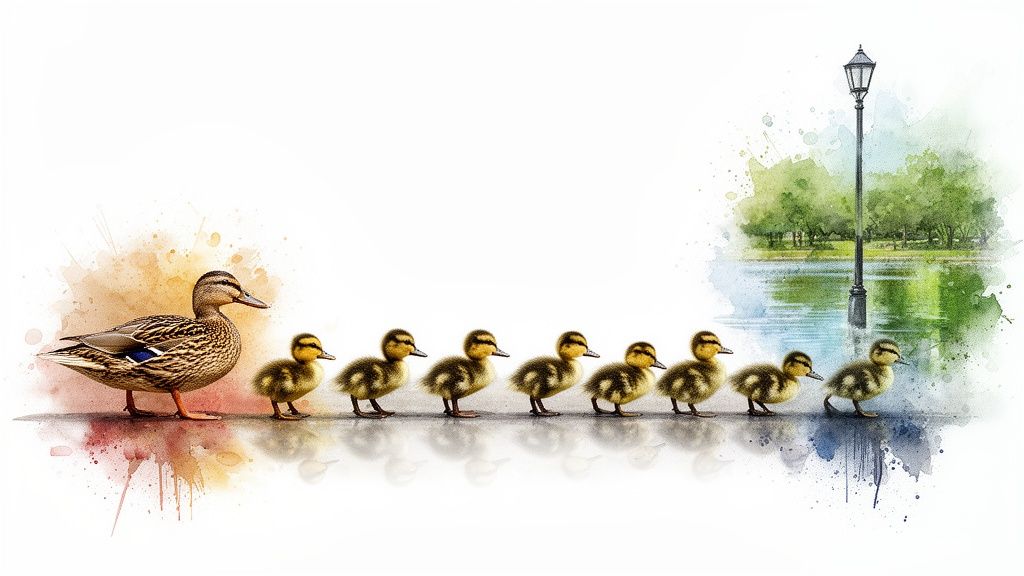
The story gently introduces themes of community, cooperation, and urban wildlife. Its detailed sepia-toned illustrations and gentle humour have made it one of the most beloved stories for preschoolers, especially in New England, where the duckling statues in the Boston Public Garden are a popular landmark. The journey of the duck family is a powerful lesson in how communities can work together to help the vulnerable.
Why It Works for Preschoolers
The book's appeal lies in its straightforward plot and relatable family dynamic. The adventure of the small ducks in a big city captures a child’s imagination, while the repetitive names of the ducklings provide a fun, rhythmic element to the read-aloud experience.
- Connects to Real Places: Show your child photos or videos of Boston, the Public Garden, and the famous duckling statues.
- Discusses Community Helpers: Talk about why Officer Michael was so important and how he helped the Mallard family stay safe.
- Encourages Movement: Have fun waddling and marching in a single file line, just like the ducklings.
- Sparks Personalisation: Use MioTales to create a story where your child helps animal characters navigate a familiar place, like your neighbourhood, emphasising teamwork.
- Practises Naming: Help your child memorise the names of the eight ducklings: Jack, Kack, Lack, Mack, Nack, Ouack, Pack, and Quack.
Its timeless message of kindness and its beautifully rendered illustrations ensure its place as a cherished story for generations of young readers.
9. Guess How Much I Love You by Sam McBratney
This heartwarming classic tells the tender story of Little Nutbrown Hare and Big Nutbrown Hare as they try to measure their love for one another. Their playful competition, with declarations stretching "as high as I can reach" and "all the way up to the moon," beautifully illustrates the boundless nature of parental love in a way that young children can grasp. Its gentle rhythm makes it one of the most reassuring stories for preschoolers, perfect for bedtime.
The book masterfully explores emotional expression and connection. Its simple, repetitive dialogue helps children develop language skills while reinforcing a secure attachment. The core theme of unconditional love is a powerful concept that builds a child’s sense of security and self-worth, a key element you can expand upon when creating a personalised MioTales story about your own family's love.
Why It Works for Preschoolers
With millions of copies sold worldwide, this book is a staple in nurseries and homes because it speaks directly to a child's emotional world. The soft, watercolour illustrations by Anita Jeram complement the story’s gentle tone, creating a calming experience.
- Promotes Emotional Vocabulary: It gives children words to express big feelings like love.
- Encourages Interaction: Read in a warm, calm voice and ask your child, "How much do you love me?"
- Sparks Imagination: Extend the game beyond the book. "I love you as deep as the ocean!"
- Fosters Connection: Ideal for quiet moments or as a bedtime ritual to end the day on a loving note.
- Inspires Personalisation: Use the MioTales story creator to craft a tale like "[Parent's Name] and [Child's Name]: How Much Love," using your own special ways of showing affection.
Its enduring message of love makes it an essential part of any preschooler's library. To cherish these reading moments, you can download a printable reading log and mark down each time you share this special story.
10. The Giving Tree by Shel Silverstein
This poignant classic tells the story of a tree's lifelong, unconditional love for a boy. The tree gives everything it has, from its apples to its branches and trunk, to make the boy happy as he grows into a man. The book's minimalist illustrations and simple, powerful prose make it one of the more thought-provoking stories for preschoolers available.
It gently introduces profound themes like selflessness, giving, receiving, and the passage of time. The story’s philosophical nature creates a space for deeper conversations about relationships, gratitude, and happiness. This powerful theme can be personalised in MioTales, allowing you to create a story where your child explores what it means to be generous and kind.
Why It Works for Preschoolers
Best suited for older preschoolers (4-5 years), this book’s success lies in its ability to spark meaningful conversations and emotional understanding. The simple narrative provides a foundation for discussing complex feelings and values.
- Encourages Empathy: Pause and ask questions like, "How do you think the tree felt when the boy took her branches?"
- Discusses Gratitude: Talk about the boy's actions. Ask, "Did the boy say thank you? How does it feel when someone gives you a gift?"
- Connects to Real Life: Relate the story to your child's own experiences with sharing and receiving.
- Sparks Personalisation: Use the MioTales Educational theme to craft a story about your child learning the joy of giving or how to show appreciation.
- Explores Change: The story is a gentle introduction to the concept of growing up and how relationships change over time.
Its lasting impact and capacity for teaching empathy make it a valuable addition to any young reader's library. You can document these meaningful story times with a downloadable printable reading log to cherish your reading journey together.
10 Classic Preschool Stories Comparison
| Book | 🔄 Complexity | ⚡ Resource requirements | 📊 Expected outcomes | 💡 Ideal use cases | ⭐ Key advantages | |---|---:|---:|---:|---|---| | The Very Hungry Caterpillar | Low — simple, repetitive plot; interactive die-cuts | Physical board book; adult read-aloud; handling time | Early literacy, counting, fine-motor skills, basic life-cycle concept | Circle time, vocabulary-building, hands-on activities for 2–4 yrs | Highly engaging visuals; multisensory learning | | Goodnight Moon | Very low — minimal plot, soothing rhythm | Quiet setting; consistent bedtime routine | Calming, listening skills, routine formation | Bedtime/naptime wind-down for 2–4 yrs | Predictable comfort; supports emotional regulation | | Where the Wild Things Are | Moderate — imaginative + emotional layers | Attentive read-aloud; discussion prompts | Emotional literacy, imagination, reassurance about belonging | Emotion-focused read-alouds, dramatization for 3–5 yrs | Validates big feelings; expressive illustrations | | Corduroy | Low–moderate — simple emotional arc | Gentle pacing; prompts for discussion | Empathy, acceptance, friendship skills | Social-emotional lessons and small-group discussion for 3–5 yrs | Teaches compassion; timeless, warm tone | | Charlotte's Web (abridged) | Moderate — richer themes, longer attention | Multiple sessions or illustrated adaptation | Friendship, loyalty, early understanding of loss | Transitional read-alouds for advanced 4–5 yr olds | Deep thematic learning; vocabulary growth | | The Snowy Day | Low — minimal text, visual narrative | Visual prompts; seasonal context (snow) | Visual literacy, description skills, imaginative play | Seasonal lessons, picture-walks and observation activities (2–4 yrs) | Strong imagery; flexible narration by caregiver | | The Cat in the Hat | Moderate — rhythmic, fast-paced text | Energetic reading style; acting space | Phonemic awareness, rhyme recognition, reading enthusiasm | Phonics activities, lively group reads for 3–5 yrs | Builds phonetic skills; highly engaging | | Make Way for Ducklings | Low–moderate — linear, realistic story | Maps/photos of locale; sequencing activities | Cooperation, community awareness, persistence | Community/geography lessons and role-play for 3–5 yrs | Teaches helping behavior; detailed illustrations | | Guess How Much I Love You | Very low — simple, sentimental structure | Calm, cuddle-time reading | Emotional security, expressive language, attachment | Bedtime or cuddle routines for 2–4 yrs | Reinforces unconditional love; soothing tone | | The Giving Tree | Moderate — minimalist but philosophically rich | Guided discussion; older preschool comprehension | Ethical reasoning, generosity discussions, emotional reflection | Values/character lessons for 4–5+ yrs with guided talk | Promotes moral conversation; multi-age relevance |
From Classic Tales to Personalised Adventures: Your Storytelling Journey
The journey through the world of stories for preschoolers is one filled with wonder, learning, and profound connection. From the simple, reassuring rhythm of Goodnight Moon to the imaginative burst of Where the Wild Things Are, the classic tales we have explored are not just entertainment; they are foundational pillars of early childhood development. They provide the language for big emotions, the framework for understanding the world, and the spark for a lifelong love of reading.
The true magic happens when you move beyond simply reading the words. By implementing the read-aloud tips and extension activities shared throughout this article, you transform story time into an interactive, multi-sensory experience. You are building critical literacy skills, fostering empathy, and creating cherished memories that will last far beyond the preschool years.
Key Takeaways for an Enriched Story Time
Remember these core principles as you continue your storytelling adventure:
- Engagement is Everything: Your enthusiasm is contagious. Use different voices, act out scenes, and ask open-ended questions like, "What do you think will happen next?" or "How do you think the little duckling felt?" This transforms passive listening into active participation.
- Repetition Builds Confidence: Preschoolers thrive on predictability. Re-reading favourite stories helps them memorise phrases, anticipate plot points, and build the confidence that is essential for becoming an independent reader. Don’t shy away from the book they ask for every single night.
- Connect Stories to Real Life: Use the themes from these books as teachable moments. After reading The Snowy Day, talk about the first time your child saw snow. After Corduroy, look for a lost button on a coat. These connections make narratives tangible and meaningful.
Your Next Chapter: Making Your Child the Hero
The enduring power of these classic stories for preschoolers lies in their universal themes of love, friendship, courage, and discovery. Now, imagine taking those powerful themes and weaving them into a narrative where your child is the central character. This is where the next evolution of your storytelling journey begins.
Personalisation is a powerful tool. It validates a child’s identity and experiences, making them feel seen, heard, and incredibly important. When a child sees their own name, their pet’s name, or their favourite colour reflected in a story, their engagement deepens immensely. They are no longer just a listener; they are the hero of the adventure. This personalised approach is not just a novelty; it is a strategic way to boost self-esteem, reinforce positive behaviours, and make the lessons within a story stick. You are not just telling a story; you are building their story.
The path from reading about beloved characters to creating tales starring your own child is a natural and exciting progression. You have the tools and the classics for inspiration. Now, take the final step and place your little one at the heart of the magic.
Ready to create a one-of-a-kind story that puts your child at the centre of the action? With MioTales, you can easily craft personalised adventures using the very themes of friendship, courage, and discovery you've explored today. Visit MioTales to start building a unique library of stories for your preschooler and watch their love for reading blossom like never before.
Related Free Tools
If this post helped, these tools will help you keep going right away.