Story Books for 4 Year Olds: Engaging Picks Your Kids Will Love
Explore story books for 4 year olds that spark curiosity, match development, and turn reading into a daily joy.
The best story books for 4 year olds aren't just a collection of words and pictures. They're an experience. They weave together simple, catchy language with bright, engaging illustrations and themes that click with a four-year-old's world. Reading becomes more than just a task; it's a special time that builds their vocabulary and lights the path for a lifelong love of learning.
What Makes a Story Book Perfect for a 4 Year Old?
Picking out a book for a four-year-old is about finding something that truly speaks to them. It's not just about a cute story. At this amazing age, their minds are buzzing and growing every single day. The perfect book meets them right where they are, firing up their imagination while also gently supporting all the big developmental leaps they're making. It’s all about finding that sweet spot where learning feels just like play.
Think of it like this: the story itself provides the basic building blocks—simple words, clear concepts, and situations they recognise from their own lives. The illustrations? Those are the exciting, colourful blocks that make the whole structure come alive. They help little ones see the story in their mind's eye and even start telling their own versions of it.
The Secret Sauce for Keeping Them Hooked
The books that four-year-olds ask for again and again usually have a few things in common. It's a kind of magic formula that grabs their attention and sticks with them long after the last page is turned.
- Simple, Catchy Language: Kids at this age absolutely love repetition, rhymes, and bouncy rhythms. These patterns are fantastic for memory and make it super easy for them to join in on the reading. You'll see their confidence soar as they start "reading" their favourite parts along with you.
- Illustrations That Tell the Story: Let's be honest, the pictures are just as important as the text, if not more so! Bold, expressive artwork helps them decode emotions, follow what's happening, and stay glued to the page, even if some of the words are still a bit tricky.
- Characters and Themes They Understand: Stories about making friends, learning to share, overcoming a small fear (like the dark!), or just going through a daily routine really hit home. When kids see their own little lives mirrored in a book, it helps them make sense of their feelings and the world around them.
Choosing a storybook is like handing a child a key to a secret garden. The right one doesn't just entertain them for a few minutes; it nurtures empathy, sparks endless questions, and lays the very first bricks for critical thinking.
In the end, a truly great book for a four-year-old does so much more than tell a tale. It's an invitation to a whole new world. It gets them talking, strengthens that cosy bond between you, and turns a simple bedtime routine into a powerful moment of connection and growth.
Matching Books to Your 4 Year Old's Developing Mind
To find the perfect story book for a four-year-old, it helps to take a peek inside their incredible, rapidly growing world. At this age, a child's mind is a story sponge, eagerly soaking up new words, bigger ideas, and the sheer magic of a good narrative. They aren't just passive listeners; they're actively connecting dots and building a map of how everything works.
Their attention spans are getting longer, which means they can finally follow a simple plot from start to finish. A wonderful sense of humour is also starting to blossom—they find pure joy in silly rhymes, funny predicaments, and surprising twists. This is also the age where they begin to get their heads around more abstract ideas like sharing, taking turns, and basic problem-solving, making stories that explore these themes especially meaningful.
Connecting Stories to Cognitive Growth
When you choose books that line up with these milestones, reading time transforms into a powerful tool for growth. You're not just keeping them entertained; you're giving their brain exactly what it's hungry for. For instance, the predictable patterns found in many classic story books for 4 year olds are more than just charming—they're building blocks for the brain.
Books packed with rhyme and rhythm are particularly brilliant. The repetition helps cement new vocabulary and language patterns in their memory. Think of it like a catchy song; the beat and recurring phrases make the words stick. This predictability also gives them the confidence to join in and "read" along, which is a massive step towards building pre-literacy skills.
A four-year-old’s brain is wired for narrative. Stories provide a framework for them to understand cause and effect, sequence, and emotion, giving them a safe space to explore the world and their place in it.
This mind map breaks down the key elements that make a book truly connect with a four-year-old.
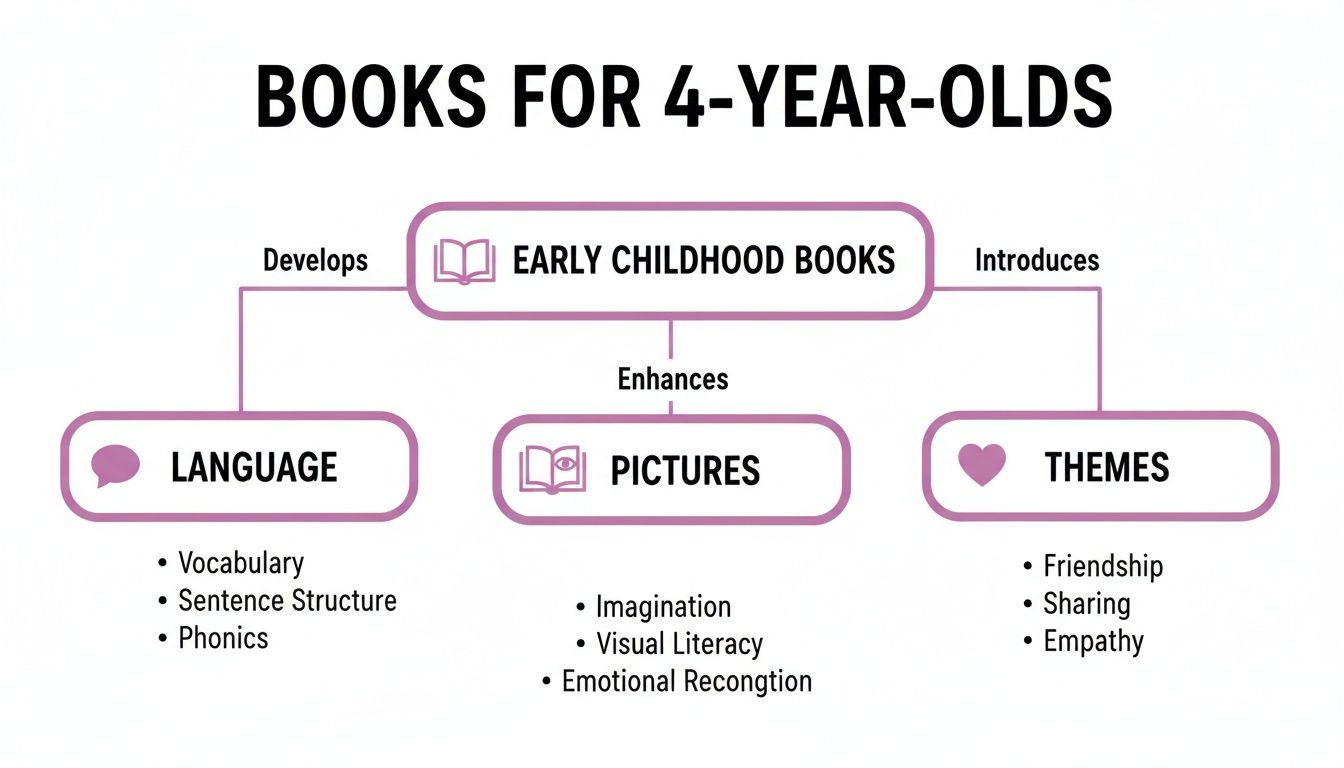
As you can see, it's the dance between language, pictures, and themes that creates a truly captivating reading experience.
To make this even clearer, this table shows how specific book features directly support a four-year-old's development.
How Book Features Support a 4 Year Old's Development
| Developmental Milestone | Ideal Book Feature | Why It Works | | :--- | :--- | :--- | | Longer Attention Span | A clear, simple plot with a distinct beginning, middle, and end. | Helps them practise following a narrative from start to finish, building their focus and comprehension. | | Emerging Sense of Humour | Silly situations, funny wordplay, or unexpected, playful plot twists. | Taps into their newfound love for the absurd and helps them understand different forms of humour. | | Growing Vocabulary | Rhyming text, repetition, and the introduction of a few new, interesting words. | The musicality of rhymes makes new words memorable, and repetition provides a low-pressure way to learn. | | Developing Empathy | Stories with relatable characters who experience clear emotions (happiness, sadness, frustration). | Gives them a safe way to identify and label feelings, laying the groundwork for emotional intelligence. | | Basic Problem-Solving | Narratives where characters face a simple challenge and find a solution. | Models resilience and critical thinking, showing them that problems can be solved with a bit of effort. |
By thinking about these connections, you can be much more intentional with the books you bring home.
Building Emotional and Social Skills Through Books
Beyond brainpower, stories are absolutely essential for nurturing emotional intelligence. When a character in a book feels sad because they lost a toy or happy because they made a friend, your child learns to recognise and name these feelings in themselves and others.
This journey of emotional discovery is a natural next step from what began in their toddler years. While younger children connect with very basic emotions, four-year-olds are ready for slightly more nuanced social situations. If you're also choosing books for a younger sibling, you might find our guide on the best story books for toddlers helpful.
By deliberately picking books that feature cooperation, kindness, and empathy, you're essentially giving your child a playbook for navigating their own social world. This insight lets you move beyond just guessing and instead choose stories that actively support their unique developmental path, making every reading session a meaningful moment of connection and growth.
What Goes into a Truly Great Story Book?
Walking into the children's section of a bookshop can be a bit much. With so many choices, how do you find a book that a four-year-old won't just like, but will absolutely love and ask for again and again? It really comes down to a few special ingredients that, when mixed together, turn a simple book into a treasured classic.
The magic happens when a book works as both a mirror and a window. It needs to reflect a child's own world—their feelings, their daily routines, their little victories—while also opening a window to new places, different people, and big ideas. This combination is what pulls them in and makes story time an adventure.
Themes That Capture Their World
Four-year-olds live in a world that’s part-reality, part-fairytale. The best story books for 4 year olds tap into this, weaving together the familiar and the fantastic in a way that just clicks for them.
- Everyday Adventures: Simple stories about a trip to the park, helping bake a cake, or getting a new puppy feel incredibly important. They show a child that their own life is interesting and worth telling stories about.
- Facing Little Fears: A book that gently tackles common worries—like a fear of the dark or nervousness about starting school—gives them a safe way to think about these big feelings. It’s comforting and empowering.
- Magic and Make-Believe: You can’t go wrong with talking animals, friendly dragons, or enchanted forests. These tales are pure fuel for their imagination, encouraging them to think creatively and dream big.
Ultimately, you're looking for stories that feel comfortable and known, but also stretch their thinking in fun, new directions.
Illustrations That Bring the Words to Life
For a pre-reader, the pictures are everything. They aren't just there to look pretty; they're doing the heavy lifting of storytelling. Bright, expressive, and colourful illustrations help a child follow along, understand the emotions, and piece together what's happening. A character's wide-eyed surprise or happy grin can tell them more than a whole page of words.
Illustrations are a child's first language. They bridge the gap between hearing a story and understanding it, allowing children to decode plot and emotion visually before they can read the words themselves.
Look for art that’s clear and engaging, where the pictures and text feel like they're working as a team. This is what creates that immersive, can't-wait-to-turn-the-page experience.
The Power of Seeing Themselves in the Story
This might be the most important ingredient of all: representation. When children see a variety of characters from different backgrounds, with different abilities and family setups, it plants the seeds of empathy. It teaches them from an early age that our world is a wonderful and diverse place.
Just as crucial, however, is giving a child the chance to see someone who looks and lives just like them. This is incredibly affirming. It sends the quiet but powerful message that your story matters. This is where personalised books truly shine, as they put your child right in the middle of the action, making the story uniquely and meaningfully theirs.
The Power of Personalised Stories
Picture this: a story where your child isn’t just a spectator. They're the hero of the whole adventure. That's the real magic of a personalised storybook. It’s a simple idea, but it completely changes the reading experience, turning it from something passive into an exciting, immersive journey.
When a four-year-old sees their own name in print and a character that looks just like them, the story suddenly becomes their story.
This connection is incredibly powerful. Instead of just hearing about a brave knight, your child becomes that brave knight. That level of personal involvement is a game-changer for capturing and holding the attention of an energetic four-year-old, making them desperate to turn the page and see what happens next.
Making Every Story Their Own
This is where platforms like MioTales come in. We make it easy for parents and caregivers to create these unique, one-of-a-kind stories. With just a few clicks, you can generate a character that looks just like your child, dropping them right into the heart of any narrative you can dream up.
The possibilities are truly endless. You can craft the adventure to mirror their real-life interests and surroundings, which helps reinforce their sense of self and their place in the world.
- Local Adventures: Imagine a magical quest through your own hometown or even a secret mission in your back garden.
- Familiar Faces: Why not include Grandma, the family dog, or their best friend as supporting characters in the tale?
- Special Interests: If they're currently obsessed with dinosaurs or fairies, you can create a story where they get to meet them face-to-face.
When a child sees their own name and likeness in a book, it sends a powerful, affirming message: "Your story is important." This validation can be a massive boost to their self-esteem and sense of identity.
This simple shift transforms reading into a deeply personal and meaningful event, forging a strong emotional connection to books. For a closer look at the benefits, explore our detailed guide on personalized books for kids.
The Growing Importance of Personal Connection
Parents everywhere are on the hunt for high-quality, culturally relevant books for their little ones. This global trend is particularly noticeable in India, a major driver in the Asia Pacific region's booming children's picture book market. We're talking about a global industry valued at $12.34 billion in 2025, which is projected to soar to $21.68 billion by 2034.
India's slice of this pie is significant, with revenues expected to climb from $545.102 million to $642.479 million. This shows a clear and growing focus from parents on early literacy and finding storybooks that feel culturally attuned. You can dive deeper into these insights about the children's picture book market at forinsightsconsultancy.com.
Personalised story books for 4 year olds meet this demand head-on. They empower families to create stories that reflect their own unique values, traditions, and daily life, making the entire reading experience more relevant and memorable. By putting your child at the centre of the narrative, you’re not just giving them a story; you’re giving them an experience that helps build a genuine, lifelong love for reading.
Making Story Time a Memorable Experience
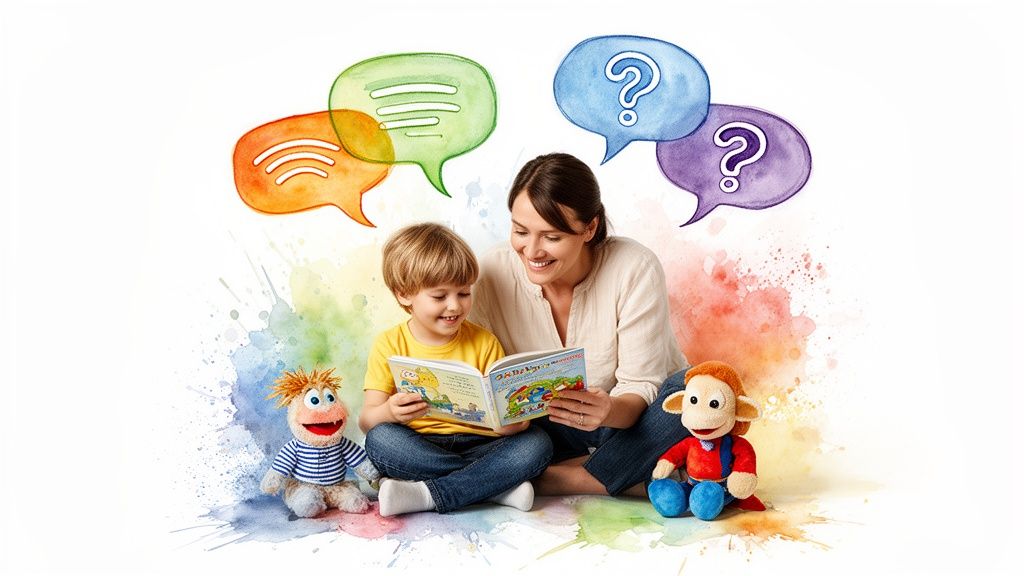
The real magic of a book doesn't just live on the page. It comes alive in the moments you share when you read it together. Turning story time into a fun, interactive event is easier than you might think, and it can transform reading from just another task into a cherished ritual. It’s all about bringing the story off the page and into the room.
A great place to start is by simply having fun with your voice. You don't have to be a professional actor! Try a deep, booming voice for a giant or a little squeak for a mouse. This one simple trick can grab a four-year-old's attention and help them tell the characters apart, making the story so much easier for them to follow.
Making Reading Interactive
To really pull them into the world of the story, make them part of it. Every so often, just pause and ask a question that gets their little gears turning. Wondering aloud, "What do you think will happen next?" or asking, "Why do you think the little fox feels so sad?" invites them to step into the story and think for themselves.
Another fantastic technique is to link what's happening in the book to your child's own world. If the story is about sharing, you could talk about that time they shared a toy with their friend at the park. Building these little bridges between the story and their life helps the lessons stick in a way that feels real and important.
Reading aloud is so much more than just a literacy exercise—it’s about connection. When you make it interactive and joyful, you’re not just raising a reader; you're strengthening your relationship and making memories that will last a lifetime.
Keeping a record of these special times and all the books you've explored can be a wonderful activity in itself. You can grab our free reading log printable to track your story time adventures and create a beautiful keepsake of your child’s reading journey.
Beyond the Bedtime Story
While a story before bed is a beautiful tradition, story books for 4 year olds are incredibly versatile. They can be a parent's secret weapon for navigating all sorts of situations.
- Preparing for New Adventures: Got a first day of school coming up or a dreaded dentist visit? Reading a story about it can calm those nerves by showing them what to expect in a safe and comforting way.
- Celebrating Milestones: A book, especially a personalised one that captures their unique spirit, makes a truly meaningful gift for a birthday or any special occasion.
It’s clear that engaging children's literature is more valued than ever, especially in a growing market like India. The print book market there is projected to hit nearly $12 billion by 2024, with children's books being a huge part of that growth. This focus on early literacy is creating an amazing selection of books, from timeless fables to modern stories. You can find more details about the Indian book market trends at publishingperspectives.com.
Ultimately, every story you share is a chance to deepen your bond and make learning feel like the exciting adventure it should be.
Still Have Questions? Here Are Some Common Ones
Choosing the right story books for 4 year olds feels like a big deal, and it's perfectly normal to have a few questions. The world of children's literature is vast and wonderful, but a little guidance can help you find those perfect reads. Let's tackle some of the most common queries I hear from parents, with practical advice to make your choices easier and more joyful.
Think of this as your friendly story time FAQ. Whether you're wondering how long a book should be or what to do with a listener who just won't sit still, I've got you covered.
What’s the Ideal Length for a Story Book for a 4-Year-Old?
For a four-year-old, the sweet spot is a story you can finish in one 10-15 minute sitting. This usually translates to a book with about 10 to 20 pages of simple, direct text. Their attention spans are getting longer, but they still do best with a clear beginning, middle, and a satisfying end—without too many confusing subplots.
A story that feels complete in one go is perfect. It holds their focus and gives them a lovely sense of accomplishment. This is where a platform like MioTales really shines, as it lets you customise the story length. You can whip up a quick 6-page adventure for a busy weeknight or craft a more detailed 20-page tale for a lazy Sunday, perfectly matching your child's mood.
How Can I Keep My 4-Year-Old Engaged During Story Time?
First off, it’s completely normal for a four-year-old to get the wiggles! Their world is just so full of fascinating things. The trick is to turn reading into an interactive experience. Use funny voices for the different characters, ask them to spot things in the pictures ("Can you find the little blue bird?"), and pose open-ended questions like, "What do you think the dragon will do next?"
Making sure the book is about something they already love—be it dinosaurs, fairies, or giant red trucks—is another game-changer. And this is where personalisation becomes so powerful. A custom book from MioTales, where they are the star of the show, is naturally captivating. After all, what's more engaging than a story all about you and your world?
Are Digital Books as Good as Physical Books at This Age?
Honestly, both have their own unique perks, and one isn't necessarily "better" than the other. Physical books are fantastic for developing fine motor skills as those little hands learn to turn the pages. Plus, they offer a screen-free, tactile experience that many families really value.
On the other hand, digital books offer amazing convenience and can come with fun interactive features. A great middle-ground approach is to use a service like MioTales, which lets you create a personalised digital story and then download it as a high-quality PDF. This gives you the best of both worlds: the ease of digital creation and the cherished experience of cuddling up with a printed, physical book.
How Important Is Diversity in Characters for a 4-Year-Old?
It's incredibly important. At this age, children are laying the groundwork for how they see the world and the people in it. When they see characters from diverse backgrounds, cultures, and family structures, it teaches them empathy and shows them that our world is a rich, varied, and wonderful place. This is especially true in India, which has a booming children's book market that shows a growing demand for culturally relevant stories. The market here is expected to grow from $545.102 million to $642.479 million soon. You can discover more insights about the growing children's book market at cognitivemarketresearch.com.
It's also vital for children to see themselves reflected in the stories they read; it's a huge boost for their self-esteem. When you create a personalised book, you have the unique power to make sure the story reflects your own family's identity and values, making it deeply meaningful.
Ready to create a story that puts your child right in the middle of the magic? With MioTales, you can craft a unique, personalised book in minutes. From designing their character to picking an amazing theme, you’re in control of building a story they'll treasure forever.
Start creating your personalised storybook with MioTales today!
Related Free Tools
If this post helped, these tools will help you keep going right away.