A Parent's Guide to Bedtime Stories for Three Year Olds
Discover how to choose and create the perfect bedtime stories for three year olds. Turn your toddler's bedtime routine into a magical, calming experience.
Bedtime stories for a three-year-old are so much more than a sweet way to end the day. They're a secret weapon for calming that busy little mind and paving the way for a peaceful night's sleep. The best tales are often the simplest: short, easy to follow, and filled with comforting, familiar ideas that mirror their own world. These stories don't just help them drift off; they subtly boost their language skills and emotional understanding, too.
The Magic of Bedtime Stories for Your Three-Year-Old
Ever notice that sudden, wild burst of energy just as you’re trying to wind down for the night? You're definitely not alone. A three-year-old's imagination is a brilliant, buzzing place, but getting all that creative energy to settle down can feel like a nightly negotiation. This is precisely where a good story works its magic. The right narrative isn't just about passing the time; it’s a key part of a healthy sleep routine that sends a clear signal to your child's brain and body: it’s time to rest.
Making storytime a non-negotiable part of your evening does more than just fill the gap before lights-out. It carves out a special moment just for the two of you, strengthening your bond and wrapping them in a feeling of security.
Bedtime stories are a gentle yet powerful tool for emotional regulation. They provide a predictable structure at the end of the day, helping a child feel safe and transition smoothly from the activity of daytime to the quiet of night.
This nightly practice has some serious developmental perks that go way beyond just getting them to sleep. For instance, consistency really pays off. In India, only about 40% of caregivers with young children stick to a consistent bedtime routine most nights. Yet, research shows that children who regularly have stories read to them at bedtime tend to sleep longer and even show better cognitive results by the time they're five. You can dig into the research on bedtime routines and sleep duration yourself.
This guide is all about getting practical and mastering the art of the perfect bedtime story. We'll focus on:
- Picking the right themes that soothe and comfort, rather than overexcite.
- Crafting calming stories that are just the right length for a three-year-old's attention span.
- Building a simple routine that makes bedtime something to look forward to, not a battle.
We’ll even look at how clever tools like MioTales can help you create custom stories with your little one as the star of the show, turning bedtime into their own magical adventure.
Finding the Perfect Bedtime Story for a Three Year Old
What makes a simple tale one of the truly great bedtime stories for three year olds? At this age, a child's mind is a little sponge, soaking everything in, but their attention span is famously fleeting. The perfect story isn't some grand, epic adventure; it's a short, sweet journey that leaves them feeling safe, understood, and ready for sleep.
The real secret is matching the story's themes and structure to where they are right now, developmentally. A three-year-old finds immense comfort in predictability and familiarity. This means simple plots, gentle characters, and happy, reassuring endings are absolutely non-negotiable for a peaceful pre-sleep ritual.
The Anatomy of a Soothing Story
A successful bedtime story for a toddler has a few key ingredients that work together to soothe, not stimulate. Let's start with length. You're aiming for that sweet spot between five and ten minutes. It’s just long enough to capture their imagination without tipping them into being overtired before they can drift off.
The language you use is just as important. Simple, clear sentences are your best friend. Weaving in a bit of rhyme and repetition not only helps their language skills blossom but also creates a comforting, predictable rhythm. Think of it like a lullaby in story form—the pattern itself is as calming as the words.
I've always found that for a three-year-old, the most comforting stories are mirrors of their own world. A tale about a bunny learning to share or a little bear getting ready for bed validates their own experiences and emotions, making them feel seen and secure.
Themes That Comfort and Connect
The most effective bedtime stories usually revolve around gentle, relatable themes. Anything with complex conflicts or overly mischievous characters can be far too exciting right before trying to sleep. Instead, I suggest focusing on narratives that reflect their daily lives and the social skills they're just starting to grasp.
Here are a few themes that I've seen work wonders with this age group:
- Daily Routines: Stories about waking up, eating breakfast, or the fun of bath time help normalise their day.
- Friendship and Kindness: Simple plots about making a new friend or helping someone are perfect for nurturing empathy.
- Overcoming Small Hurdles: A story about finding a lost toy or learning to put on their own shoes (with a little help) builds confidence in a big way.
- Exploring Nature: Gentle adventures in a back garden or a local park connect them to the world in a calm, curious way.
To help you get a clearer picture, here’s a quick comparison of what to look for and what to steer clear of when picking a story.
Choosing the Right Story Elements for a Three Year Old
| Element | What Works (Calming & Engaging) | What to Avoid (Stimulating & Unsettling) | | :--- | :--- | :--- | | Plot | Simple, linear, and predictable. A clear beginning, middle, and happy end. | Complex plots with twists, suspense, or unresolved problems. | | Characters | Familiar and relatable, like friendly animals or other children. | Scary monsters, villains, or characters who are mean or naughty. | | Pacing | Slow, gentle, and rhythmic. Allows time for them to process. | Fast-paced action, loud noises, or sudden, surprising events. | | Themes | Kindness, family, daily routines, nature, helping others. | Conflict, fear, being lost (unless resolved quickly), or complex emotions. | | Ending | Always happy, reassuring, and conclusive. Everyone is safe and sound. | Ambiguous, sad, or cliffhanger endings that leave them wondering. |
Thinking through these elements helps you intentionally choose a story that calms their nervous system and prepares them for rest, rather than accidentally winding them up.
The infographic below really brings home how these simple stories help build crucial skills.
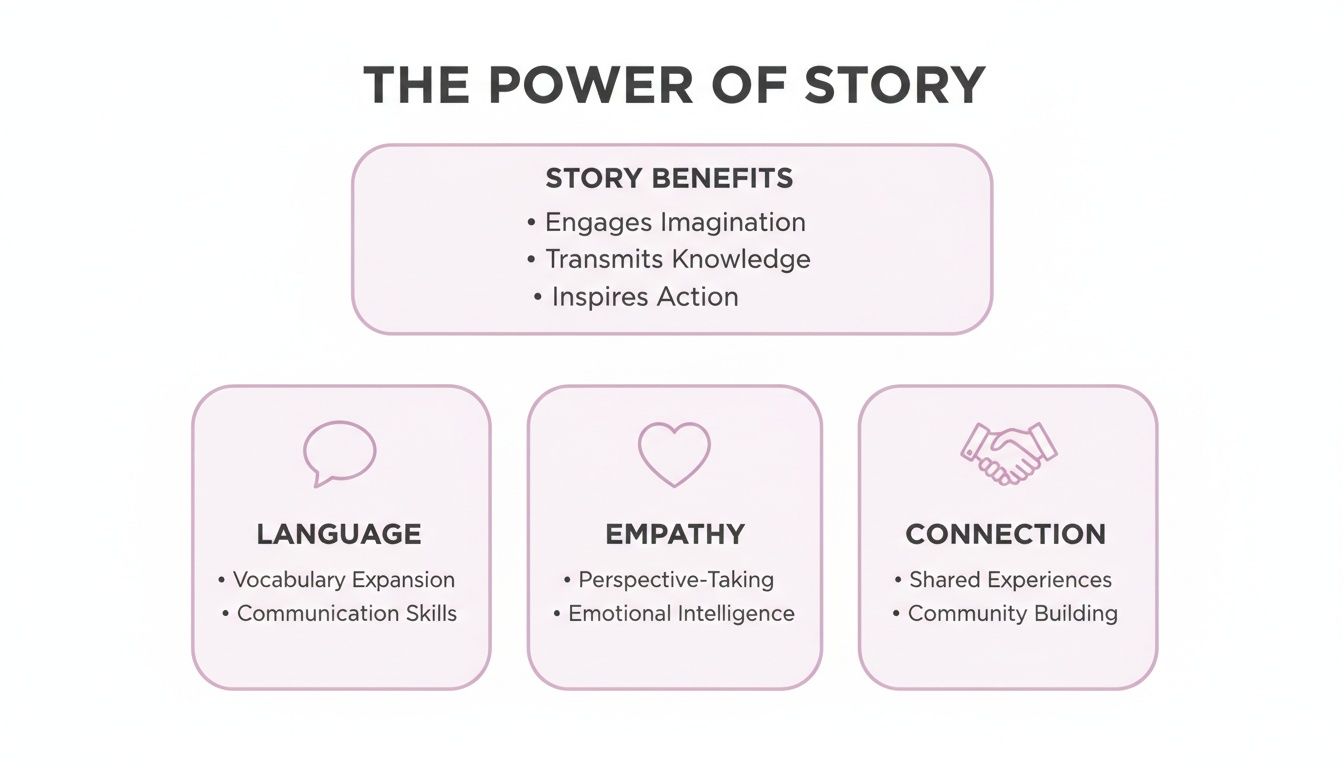
As you can see, the right story is a powerful tool for nurturing not just language and empathy, but also that special connection you share. If you'd like to explore a wider variety of narratives, you can learn more about the best bedtime stories for kids in our other guides.
Ultimately, choosing the right story is an act of empathy. It’s about seeing the world from their perspective—a world where a lost teddy bear is a crisis and sharing a snack is a huge victory. By picking tales with these gentle elements, you create a bedtime experience that is not only calming but also deeply affirming for your little one.
Making Your Child the Hero of Their Own Story
Imagine the look on your three-year-old’s face when they hear their own name as the main character in a grand adventure. It’s pure magic. This simple act of personalisation does more than just grab their attention; it makes them feel seen, valued, and important in a world that can often feel very big.
When a child becomes the hero of their own story, it’s a powerful way to reinforce their budding sense of self. It sends a clear message: you are capable, you are brave, and you are the centre of your own amazing world. This boost in self-esteem is especially vital for three-year-olds, who are right in the middle of figuring out who they are.
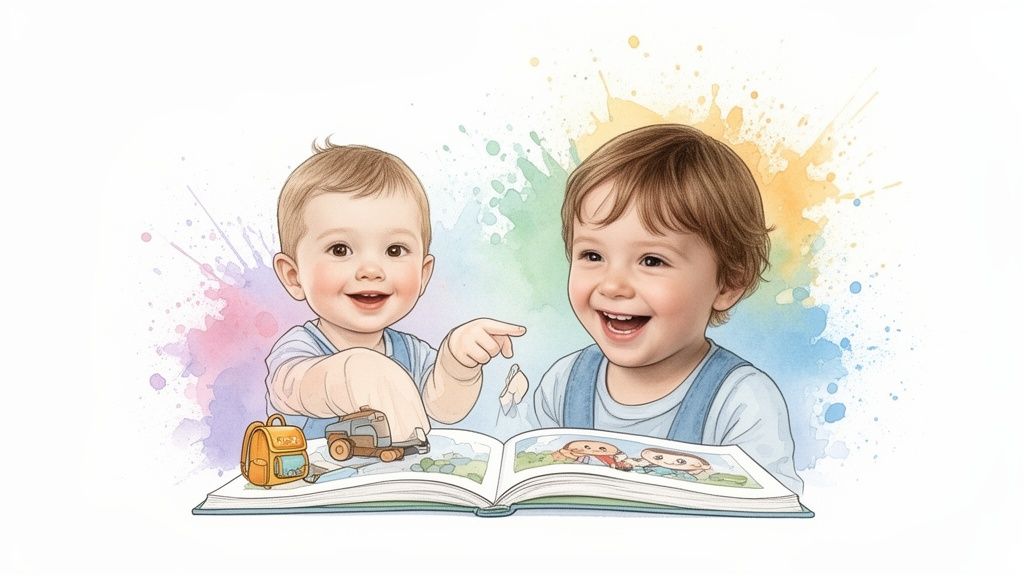
This is the very heart of platforms like MioTales, where you can easily create beautifully illustrated storybooks starring your little one. The process isn't just about plugging in a name; it’s about weaving their unique personality and experiences into a narrative built just for them.
Weaving Real Life into Magical Tales
Personalised stories are an incredible tool for gently navigating real-world milestones and challenges. A three-year-old’s world is packed with new experiences, and some of them can feel a little daunting. Storytelling offers a safe, cosy space to explore these big feelings.
Think about it. A parent in Delhi is getting their daughter, Priya, ready for her first day at nursery. They could create a story where a brave hero named Priya meets new friends and has a fantastic time. By seeing herself succeed in the story, the real-life Priya feels more confident and prepared for the big day.
This simple technique works beautifully for so many common toddler hurdles:
- Starting Preschool: You can create a story about their character having a fun-filled day at school, meeting a kind teacher and playing with new friends.
- Learning to Share: Try crafting a tale where their hero discovers how wonderful it feels to share a favourite toy with another character.
- Welcoming a New Sibling: A story can frame their new role as a big brother or sister in a really positive and exciting light.
- Trying New Foods: What if there's a fun adventure where the hero gets superpowers just by trying a yummy new vegetable?
Custom stories act as a gentle rehearsal for life. They allow a child to mentally walk through a new situation in a safe, positive context, which can significantly reduce anxiety and build resilience.
The Cultural Power of Personalised Stories
The tradition of storytelling runs deep in Indian culture, especially through timeless collections like the Panchatantra. These tales, with over 42 stories compiled for children over three, have been used for generations to teach important moral values. A 2022 survey actually found that 65% of Indian parents with young children share these kinds of stories several times a week, a practice known to boost empathy and moral development.
The animal protagonists in these classic fables serve a similar purpose to the customisable heroes in modern tools like MioTales—they allow a child to see themselves in the main character and learn from their journey.
Customising the Adventure
Modern platforms give you the power to go far beyond just adding your child’s name. With a tool like MioTales, you can fine-tune every little detail to craft a truly unique experience. You can pick out illustration styles—from soft watercolours to vibrant cartoons—that you know your child will love. Our guide on bedtime stories for kids with pictures offers more great insights into the power of visual storytelling.
You can also adjust the themes to line up with their current obsessions, whether that’s dinosaurs, fairies, or friendly farm animals. By making your child the star, you transform bedtime stories for three year olds from a simple routine into a cherished, confidence-building ritual.
Crafting a Calm and Consistent Reading Routine
Picking the right story is a fantastic start, but the real magic comes from wrapping that story in a calm, predictable routine. For a three-year-old, the world is a whirlwind of new and sometimes overwhelming experiences. A steady bedtime ritual is their comforting anchor, a signal that the day is winding down and it's time to rest.
This predictability is what turns story time from just another activity into a powerful cue for sleep. The aim is to create a peaceful transition, not just to tick an item off a checklist.
Think about the half-hour before you even open the book. This is your wind-down window. Dim the lights, turn off all screens, and ease into quiet activities. A warm bath, a simple puzzle, or some gentle snuggles can work wonders. This buffer period helps lower their energy levels, making them far more receptive to the calming effect of a story. Going straight from a rowdy game to a quiet book can leave them too wired to settle.
Setting the Scene for Sleep
Having a dedicated space for reading can make a huge difference. It doesn't need to be anything fancy—a cosy corner of their bedroom with a soft cushion, their favourite blanket, and gentle lighting is all it takes. This special spot becomes part of the ritual, another signal to their brain that sleep is on its way.
Make sure this reading nook is a screen-free zone. The blue light from phones and tablets can mess with melatonin, the hormone that helps regulate our sleep cycles. A real-life book is always the best choice for this precious time together.
A consistent bedtime routine isn’t about being rigid; it’s about being reliable. When a child knows exactly what to expect, they feel secure. That feeling of safety is what lets their busy little minds finally relax and drift off.
Reading Aloud with a Soothing Tone
How you read matters just as much as what you read. Your goal here is to soothe, not to put on a show. Use a soft, gentle voice and read at a slower pace than you would during the day. This creates a rhythmic, almost hypnotic effect that is incredibly calming for a young child.
As you’re reading, try a few of these simple techniques to make it even more special:
- Point to the Pictures: This is a simple way to build their vocabulary, connecting the words they hear to the images they see. It keeps them gently engaged without being overstimulating.
- Keep Your Voice Low: This isn't the time for high-pitched, excited character voices. Instead, use subtle shifts in your tone to hint at different characters while keeping the overall atmosphere peaceful.
- Pause and Breathe: There's no need to rush. A slow, deliberate pace gives them time to take in the story and enjoy the illustrations, making the whole experience feel more serene.
By pairing a lovely story with a well-thought-out routine, you’re doing more than just reading bedtime stories for three year olds. You're building a cherished ritual that deepens your connection and guarantees a much calmer end to everyone's day.
Adapting Stories for Sensitive Children
Every three-year-old is different. Some are little adventurers, while others have a more sensitive soul. A story that one child finds hilarious and exciting might feel a bit too much for another. The real magic happens when you tune into your child's unique personality and adapt the story to fit them, creating a bedtime ritual that feels genuinely peaceful and safe.
If you have a child who is a light sleeper, startles easily, or just has a more cautious nature, think "gentle." You’re looking for stories with a soft, lulling rhythm, maybe with calm, repetitive phrases and a simple, low-stakes plot. The goal here isn't grand adventure; it's about wrapping them in a warm, narrative hug before they drift off to sleep.
Identifying and Addressing Specific Fears
At three, imaginations are running wild, which can sometimes lead to big fears. It's totally normal for little ones to worry about the dark, being on their own, or strange sounds they hear at night. Bedtime stories are a wonderful, gentle way to explore these feelings without making them scary. Instead of tackling the fear head-on, you can reframe it within a story, giving your child a sense of control.
This is where creating your own stories really shines. A platform like MioTales puts you in the author's seat, so you can build a therapeutic tale from scratch that speaks directly to your child.
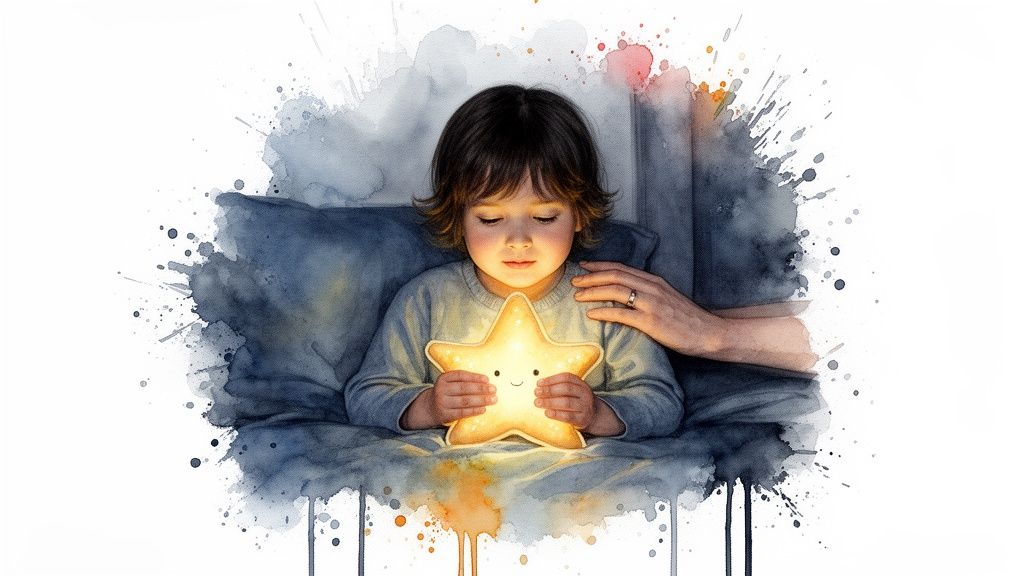
- Fear of the Dark? How about a story where your child meets a friendly little star who guides them through the night, showing them all the magical things they can only see after sunset?
- Worried About Being Alone? You could tell a tale of two fluffy bunnies in separate burrows who can always feel the thump-thump-thump of each other's loving heartbeats through the ground.
- Scared of Noises? Try an adventure where your child and a tiny mouse become detectives, discovering that the "scary" creaks are just the old house stretching and yawning as it gets ready for sleep, too.
When you turn something scary into a friendly character or a puzzle to be solved, you're helping your child process their feelings in a safe, imaginative way. If you're not sure where to start, using a feelings chart for kids can be a great way to open up a conversation about what’s on their mind.
Using stories to gently reframe a child’s fears is a powerful form of emotional coaching. It validates their feelings while offering a new, more positive perspective, building resilience one gentle story at a time.
Sensory Needs and Storytelling
Some children experience the world with heightened senses, meaning that things we might not even notice can feel overwhelming to them. Think of the classic fairytale 'The Princess and the Pea'—a story popular in India through various local retellings. It’s a perfect metaphor for sensory sensitivity, where even one tiny thing can disrupt everything.
This isn't just a fairytale concept. A groundbreaking BMJ study analysed these kinds of stories for their connection to real-life sleep issues. This is particularly relevant when you consider a 2023 AIIMS survey finding that 28% of Indian children aged 2-5 resist bedtime. You can read more about these storytelling metaphors and sleep research.
When you craft your own bedtime stories for three year olds, you can cater directly to these needs. Keep the pace calm and even. Avoid sudden loud noises or big surprises in the plot. The story itself can become a soothing sensory experience, helping to calm an overstimulated little mind and body before sleep.
Common Questions About Bedtime Stories
As you start to fine-tune your evening routine, a few questions are bound to pop up. Let's be honest, getting clear, practical answers can be the difference between a bedtime battle and a peaceful drift-off to sleep. Here are some of the most common things I hear from parents about bedtime stories for three year olds.
How Long Should a Bedtime Story Be?
For a three-year-old, the sweet spot is usually between five and ten minutes. We have to remember their attention spans are still developing, and they're already tired by the end of the day. A short, sweet story with a simple beginning, a gentle middle, and a happy end will always win over a long, winding epic.
The real goal here is to calm their minds and ease them into sleep, not to keep them wide-eyed and entertained. This is where a tool like MioTales can be a real lifesaver. You can set the story length and get a perfect six-page read that’s just the right length for winding down.
What if My Three-Year-Old Gets Scared?
First off, it’s completely normal for a three-year-old to get scared by a story. Their imaginations are running wild at this age, and the line between fantasy and reality can get a little blurry. If you notice your little one getting anxious, take it as a sign to simplify and stick to gentle, reassuring themes.
Try focusing on stories that centre around safe, comforting ideas:
- Friendship and helping: Think about tales of friendly animals or children being kind to one another.
- Daily routines: There's immense comfort in stories about familiar things, like taking a bath or planting a seed in the garden.
- Simple achievements: A story where the main character learns a new skill, like tying their shoes or riding a scooter, can be wonderfully empowering.
For now, steer clear of anything with traditional villains, suspense, or even mild conflict. This is where creating your own personalised stories really shines. You can craft a narrative where your child is the hero who does something brave but gentle, like helping a lost kitten find its mum.
I always tell parents to see fear not as a problem, but as a signal. A child’s fear is just a cue telling us they need more comfort and predictability. A simple, happy tale is the perfect antidote.
Is It Better to Read from a Book or Tell a Story?
Honestly? Both are fantastic, and they each bring something special to the table. Reading from a physical or digital book is a brilliant way to build early literacy skills. It helps your child connect the words you're saying with the pictures and text on the page, creating a strong visual anchor for the story.
On the other hand, telling a story straight from your imagination offers a unique kind of magic. You can weave in little details from your child's own day, making the tale feel incredibly personal and relevant to them. A great approach is to mix and match.
You could use a personalised book from a service like MioTales as your go-to on most nights. Then, on other evenings, you can invent spontaneous new adventures starring the very same character your child already knows and loves. This keeps the routine feeling fresh while still providing that all-important sense of familiarity and comfort.
Ready to create a truly magical story? With MioTales, you can make your child the hero of their own custom-illustrated book in just a few minutes. Start your free trial and craft a unique adventure tonight!
Related Free Tools
If this post helped, these tools will help you keep going right away.
Great for: story prompts for kids
Story Prompts for Kids
Generate prompt ideas by age and theme.
Great for: short story prompts for kids
Short Story Prompts for Kids
Quick writing ideas for class and bedtime.
Great for: story starter for kids
Story Starter for Kids
Get first-line starters to begin writing fast.